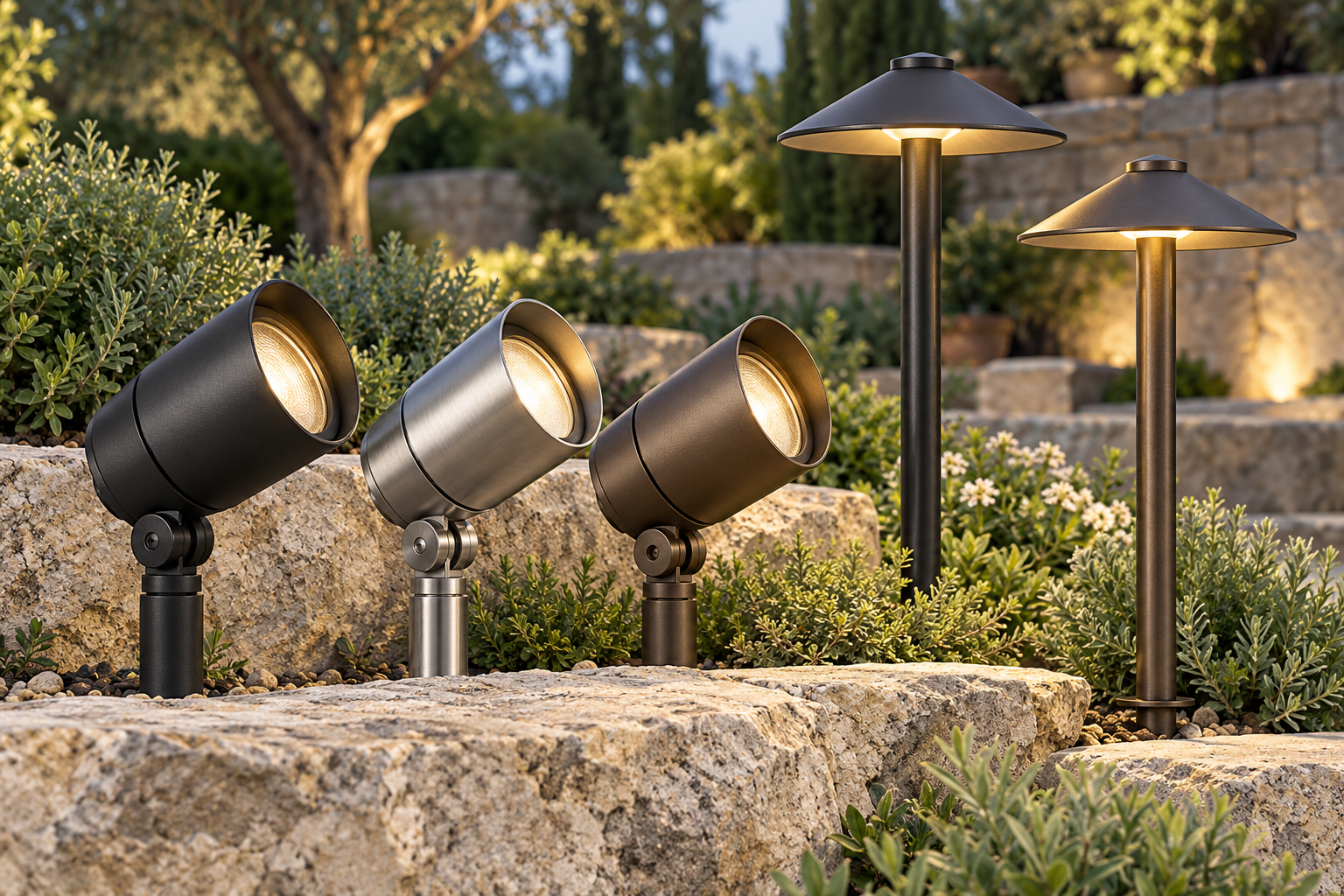
A beautiful landscape lighting plan uses different fixtures for different jobs. The light that brings out the branches of a tall tree is rarely the best choice for a narrow walkway. A fitting that disappears into a planting bed may be inappropriate beside a frequently used step.
Start with the effect you want, then choose the fixture, beam, output and position together. This guide explains the main residential landscape lighting fixture types, where they work and the placement details that make them more comfortable to live with.
1. Spotlights And Adjustable Uplights
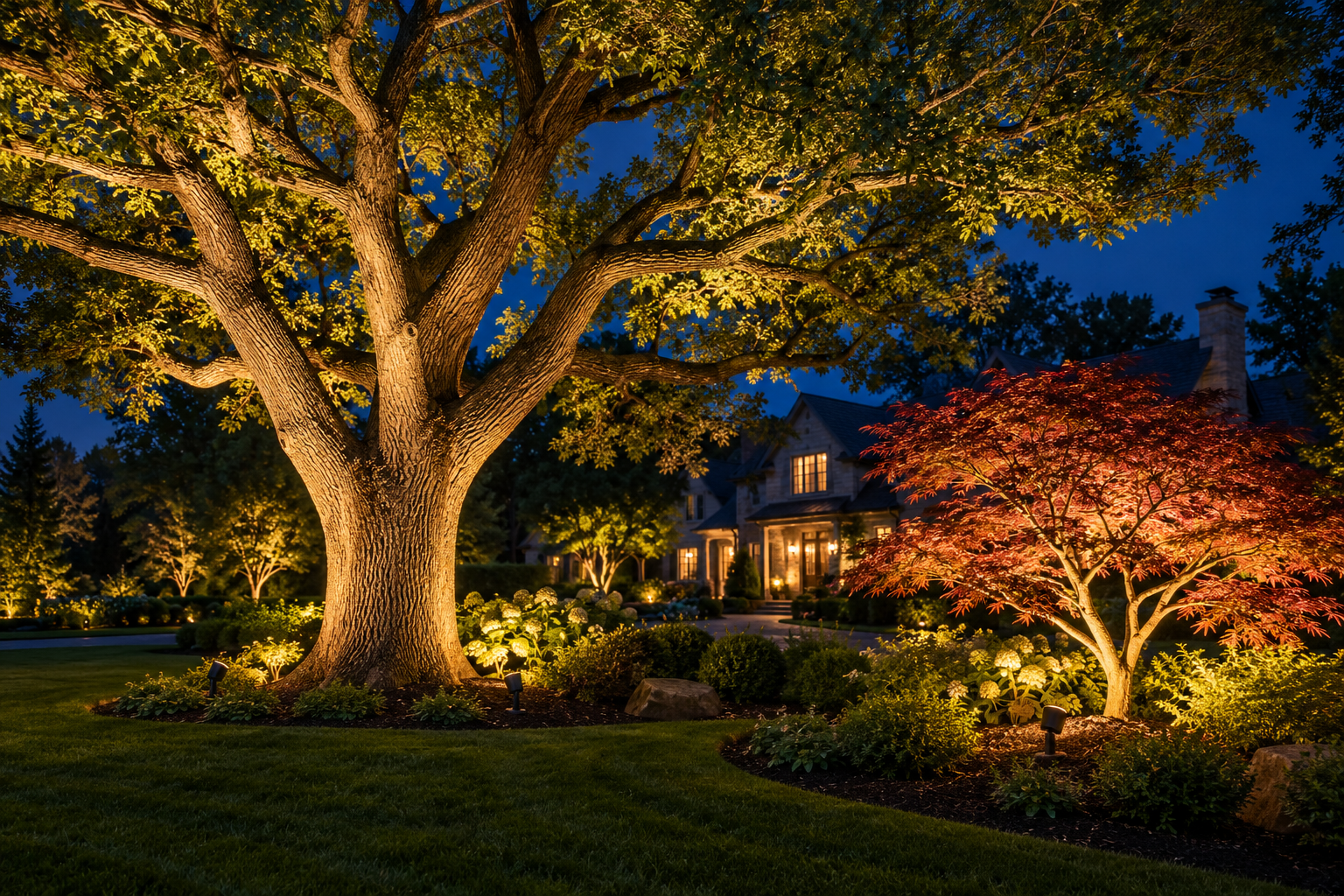
Purpose: create a focused accent on a tree trunk, column, sculpture or architectural feature. Adjustable heads let the installer direct the beam and refine it after dark.
A narrower beam can suit a slender column or a tall, narrow tree; a broader distribution may suit a branching canopy. The beam angle alone does not determine the result. Fixture output, distance and aiming also matter. A large tree may need several carefully positioned fixtures to reveal its shape from important viewpoints.
Placement detail: hide the direct view of the LED where practical, aim within the feature, and keep fixtures away from mowing and trimming paths. An uplight is a direction of use, not a promise that all its light stays on the target.
2. Floodlights And Broad-Beam Accents
Purpose: cover a wider subject, such as a broad evergreen, substantial planting group or larger architectural surface. They can provide a gentler broad effect when selected and aimed carefully.
Landscape floodlights are not automatically high-output security lights. A broad beam at modest output can work better than a bright narrow spot for some subjects. Too much output can flatten the view and make adjacent areas feel unnecessarily dark by comparison.
Placement detail: check the beam edges from the sidewalk, neighboring property and seating areas. A shield or different mounting position may be needed to limit spill.
3. Wall-Wash Fixtures
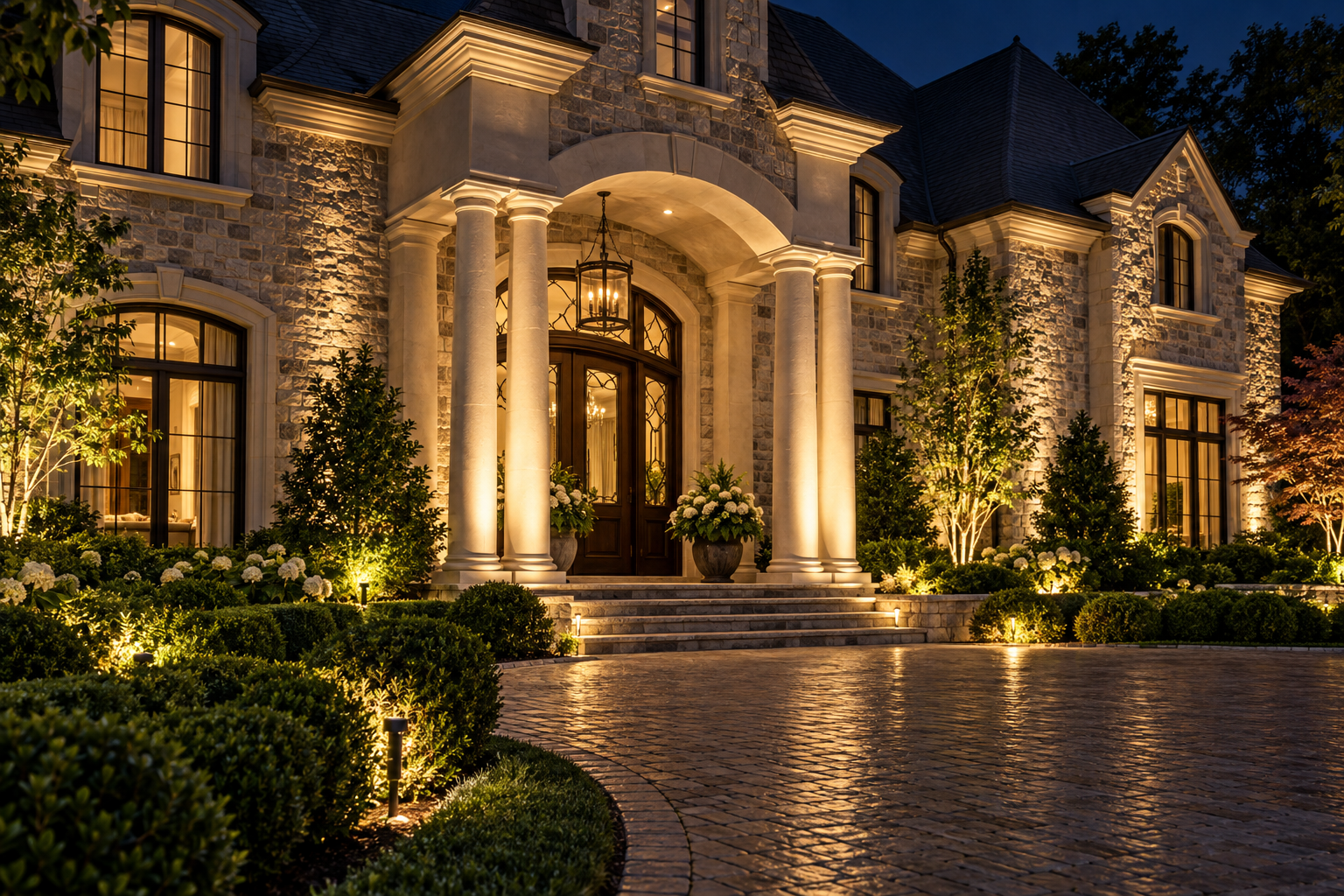
Purpose: distribute light across a wall, low facade, hedge or other broad surface. Wall washing helps create a softly illuminated backdrop rather than a small bright patch.
Washing and grazing are different effects. A wash aims for relatively even coverage. Grazing places light close to a textured surface so shadows emphasize its relief. Stone or brick may suit grazing, while a smoother wall may benefit from a more even wash. The best setback is determined by the fixture and surface, not one universal measurement.
4. Path And Area Lights
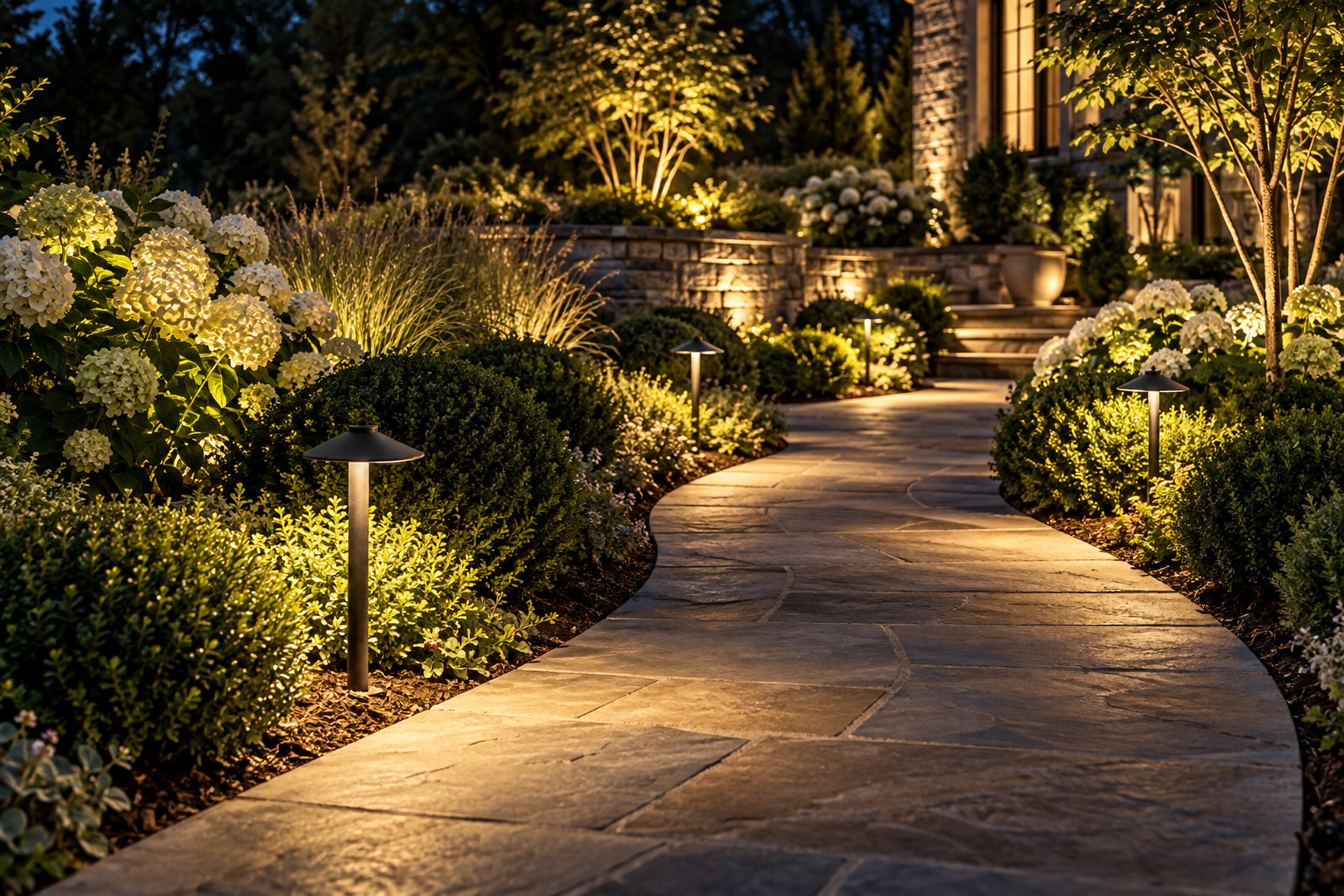
Purpose: direct light downward onto a walkway edge, garden bed or small area. A hooded path fixture can illuminate the surface while keeping the light source less visible.
Spacing should follow the actual spread of light and the turns, steps or transitions in the route. Automatically putting identical lights at identical intervals can create a runway effect or leave useful areas dark. A few carefully placed fixtures may work better than a crowded line.
Placement detail: keep stakes and heads clear of foot traffic, hoses, snow-clearing routes and lawn equipment. Consider mature plant height; a fixture that looks clear today may disappear inside a shrub next summer.
5. Well Lights And In-Ground Uplights
Purpose: place a light at or near ground level where a projecting fixture would interrupt the view. They are often used for selected trees, columns and architectural accents.
A flush appearance does not eliminate maintenance. Leaves, mulch, standing water and soil can cover the lens or affect performance. Proper drainage and the manufacturer’s installation requirements are essential.
Placement detail: use a fixture rated for its actual location. Not every in-ground light is suitable for foot traffic, vehicle loading or an area that floods. Plan access so the fitting can be cleaned and serviced.
Let’s plan your landscape lighting.
6. Downlights And Tree-Mounted “Moonlighting”
Purpose: cast light downward from an elevated position onto a path, planting bed or gathering area. When positioned in a tree, light passing through branches can create a soft pattern sometimes called moonlighting.
Downlighting can keep much of the illumination where it is needed, but glare still depends on shielding and viewing angle. Aiming a bright fixture directly toward a patio can be uncomfortable even if it is mounted high.
Placement detail: tree mounts and cable routing should allow for tree health, growth and later adjustment. Elevated fixtures also need a realistic maintenance plan. Consider how they will be reached when a lamp, driver or connection needs attention.
7. Step Lights, Deck Lights And Hardscape Lights
Step lights define treads and changes in level. Recessed or surface-mounted models may fit risers, nearby walls or side positions. The goal is to reveal the walking surface without shining into the eyes of someone climbing the stairs.
Deck and post lights add local illumination around railings, entries and seating edges. They can give a deck definition while preserving a relaxed atmosphere. Placement should account for furniture and the view from inside the house.
Hardscape lights often tuck beneath wall caps, ledges, benches or outdoor kitchen features. They can reveal texture and edges with little visible hardware. Access to concealed wiring and replaceable components is especially important when masonry is involved.
Placement detail: discuss these fixtures before new hardscape is completed whenever possible. Installing sleeves or planned cable routes during construction can avoid awkward retrofits later.
8. Specialty Fixtures
Flagpole Lighting
Dedicated directional fixtures can illuminate a flag above the landscape. Pole height, flag size, its movement and surrounding viewpoints influence fixture selection and aiming. Keep the beam focused on the flag rather than broadly lighting the sky. We also offer flagpole installation.
Underwater And Water-Feature Lighting
Ponds and fountains can use fixtures specifically rated for submersion and the intended application. Ordinary weather-resistant fixtures are not substitutes. Swimming pools and spas have additional equipment and installation requirements; arrange those with qualified professionals and the appropriate listed products.
Bollards And Larger Area Fixtures
A bollard can provide a stronger architectural presence along a wider route or larger property. Choose shielding and distribution carefully; exposed bright lenses can draw more attention than the landscape. Scale should match the setting.
Linear And Concealed Accent Lighting
Outdoor-rated linear systems can highlight a bench, ledge or suitable architectural recess. Verify the rating of the entire installed assembly, including connectors and power components. A sheltered position does not make an indoor product appropriate outdoors.
What To Compare Beyond The Fixture Shape
- Light quality: color temperature, color rendering, beam pattern and comfortable output.
- Construction: actual housing material, finish, seals, fasteners and mounting strength.
- Service: replaceable lamps or LED modules where supported, accessible connections and replacement-part availability.
- Power: a compatible transformer, properly planned cable runs and voltage within the fixture’s specified range.
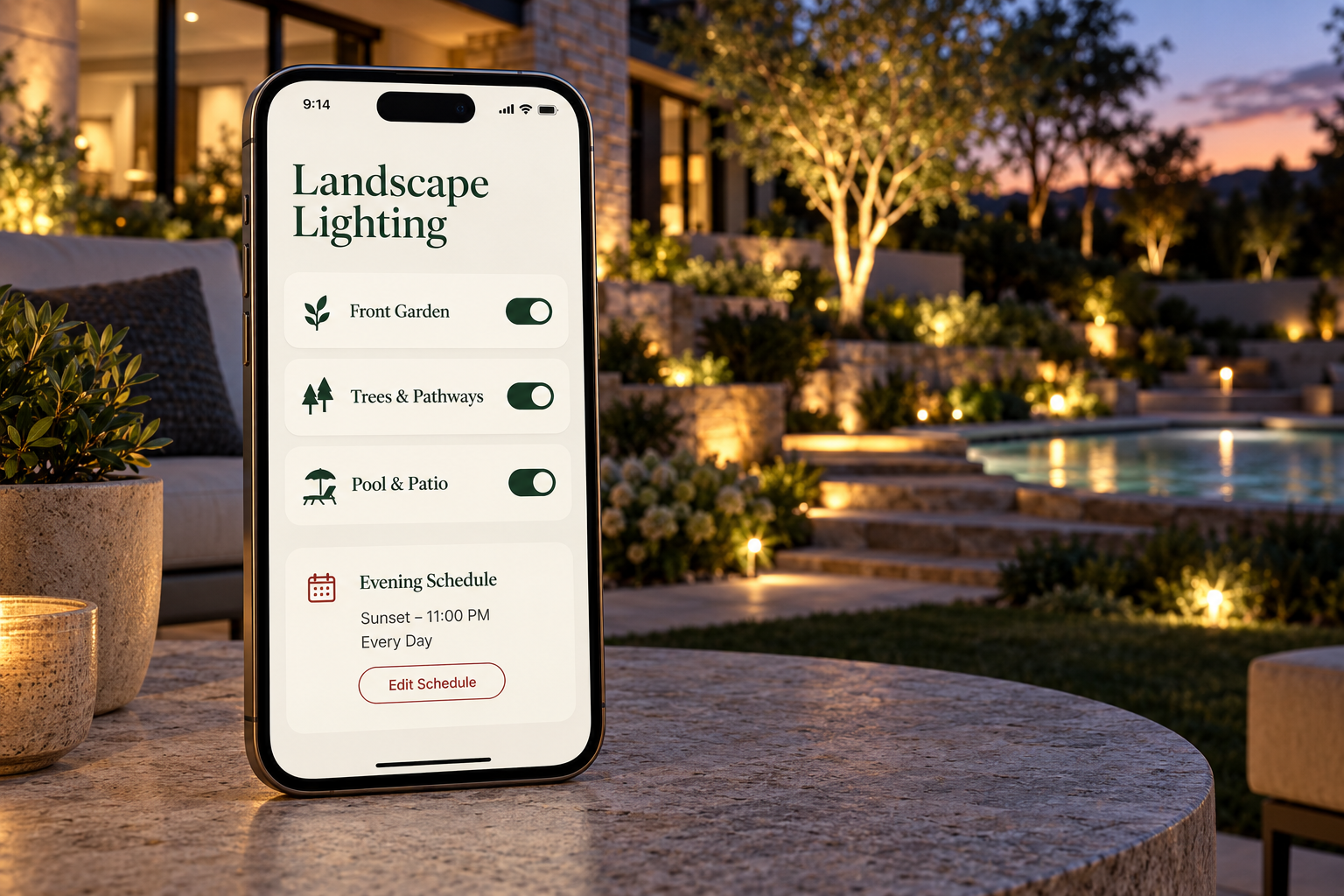
- Controls: the ability to group and schedule the areas you want separately.
FX Luminaire’s cable-planning guidance explains why cable sizing and voltage drop matter. The permitted voltage range is product-specific; the installer should follow the selected fixture’s instructions.
Choose A Layered Plan, Not One Of Everything
A small property might need path lights, a few architectural accents and one carefully lit tree. A larger outdoor living space may benefit from steps, walls and separate entertaining zones. Fixture variety is useful when each fitting has a purpose, not when it adds clutter.
During design, walk the property after dark and identify the places you use and the features you want to see. Then prioritize those areas within your budget. Illustrations in this guide show design possibilities; your proposal identifies the actual fixtures and coverage.
Common Questions
Are uplights and spotlights the same thing?
A spotlight describes a focused distribution. Uplighting describes aiming upward. Many adjustable spot fixtures can provide uplighting, but fixture choice still depends on the subject.
Do professional metal fixtures survive any impact?
No. Substantial housings and secure mounts help with everyday durability, but mowers and trimmers can damage any fixture. Placement and clearance remain important.
Can I expand a landscape system later?
Often, with planning. Transformer capacity, cable layout, controls and compatible components determine what is practical.
A Lighting Plan For Your North Jersey Home
The Real Houselights of NJ serves Bergen, Passaic, Essex and Morris counties, plus Rockland County, NY. Tell us what you want to light, the areas you use most, and your project budget. We’ll review your priorities and recommend a practical design for your property.
Start with your ideas. Build around your budget.