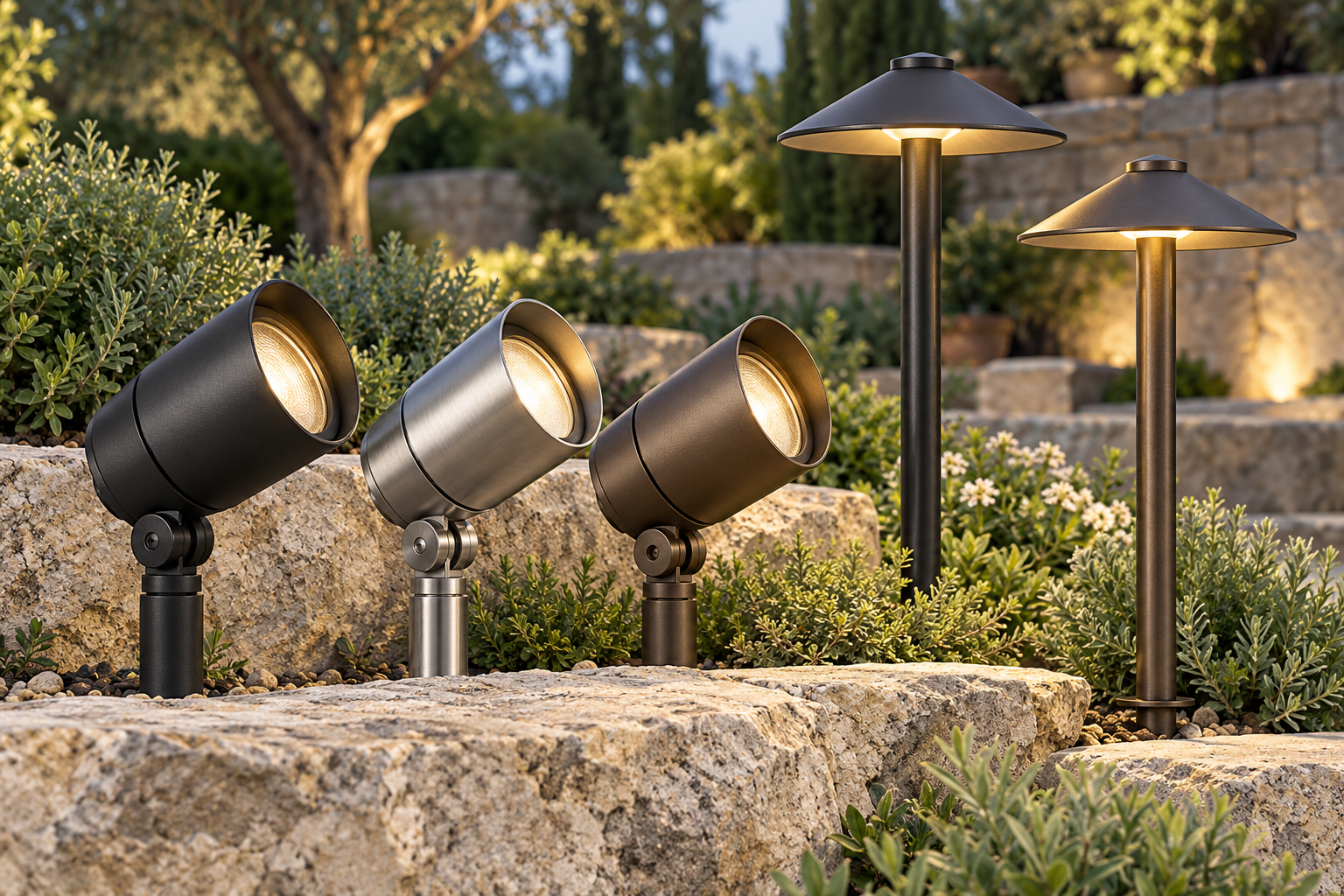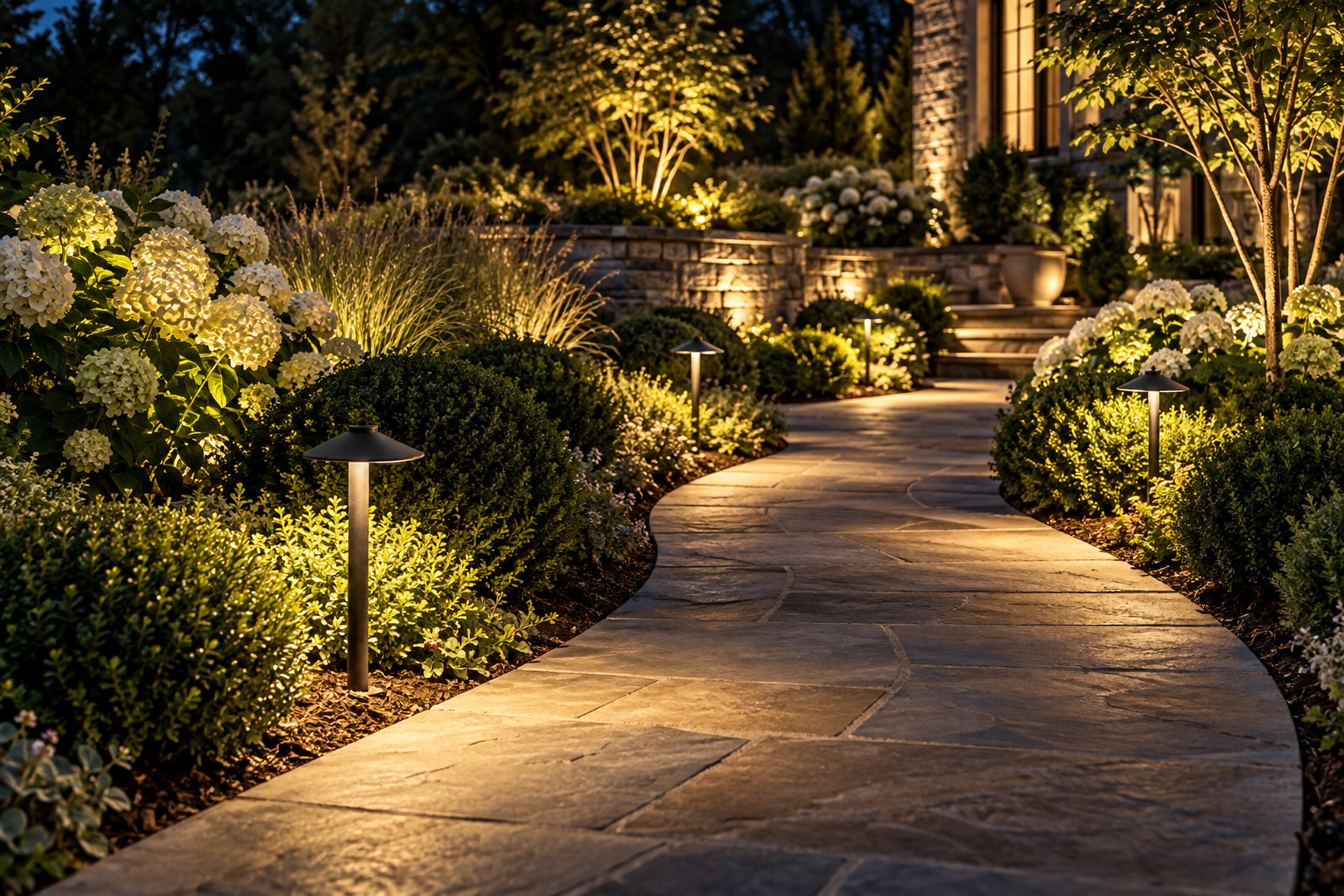
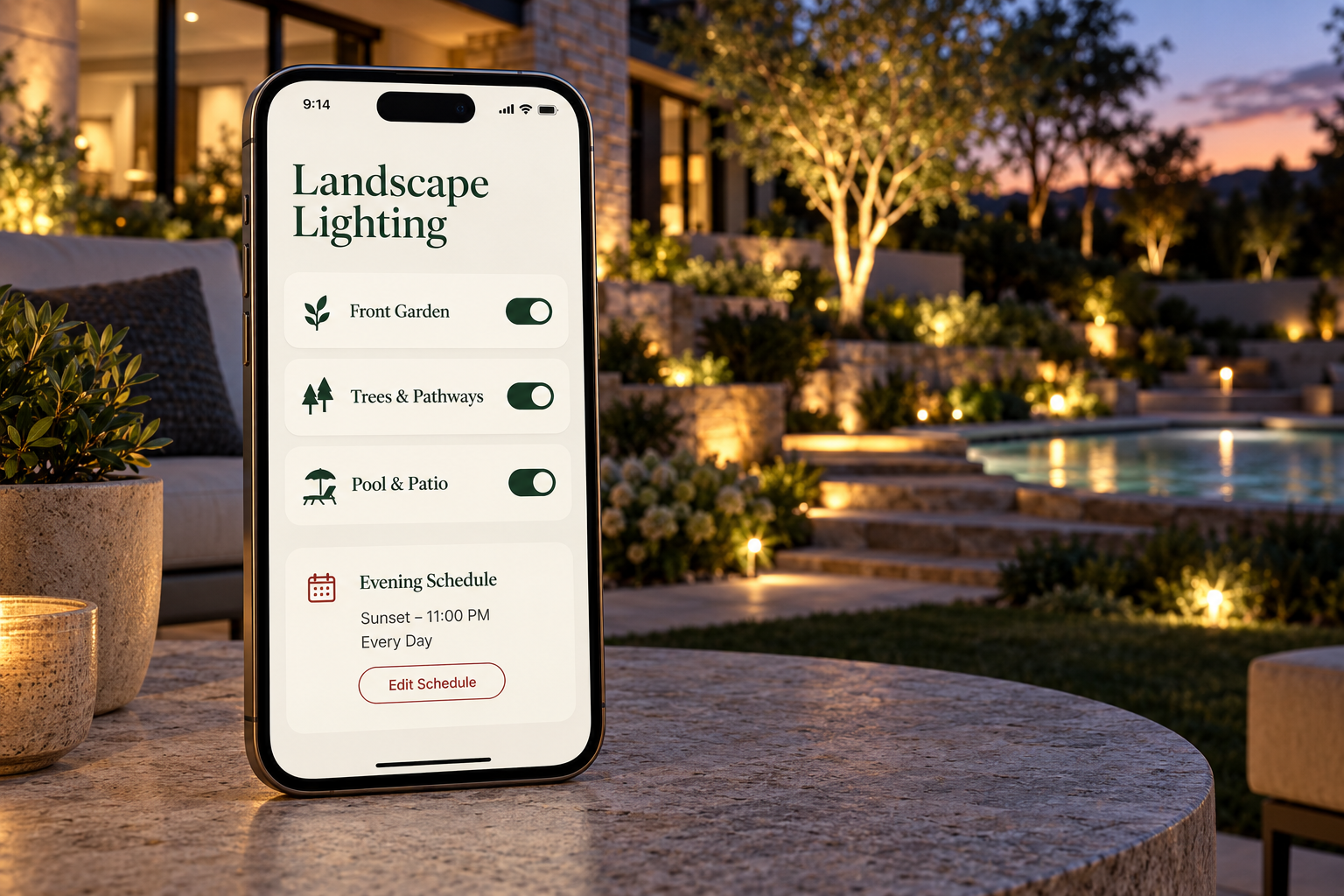
Your front entrance, garden and patio do not all need the same lighting schedule. The front may need a welcoming glow early in the evening, while the backyard stays on longer when you host. Dividing landscape lighting into zones gives each area a more useful role.
Zoning is about controlling the right places at the right times. It does not require colored landscape lights. A warm-white system can have plenty of flexibility through thoughtfully planned groups and schedules.
What Is A Landscape Lighting Zone?
A zone is a group of lights you can control together independently of another group, using compatible equipment. That could be a separate circuit or output, an addressable group, or another arrangement supported by the selected system.
A transformer with several terminals is not automatically a multi-zone controller. Some terminals simply provide different voltage outputs while every connected light follows the same schedule. Ask what is actually independently controllable.
Likewise, having an app does not guarantee per-fixture control or dimming. We plan the controller and fixtures around your requested behavior and explain what the chosen system supports.
A Practical Three-Zone Example
| Zone | What it includes | How you might use it |
|---|---|---|
| Front arrival | Entry approach, selected path lights and house accents. | On during evening arrivals, with a suitable shutoff time. |
| Garden features | A favorite tree and selected planting beds. | A shorter decorative schedule when you want to enjoy the view. |
| Outdoor living | Patio surroundings, nearby steps and garden edges. | Available for dining or hosting, then switched off afterward. |
Your property may need fewer or more groups. Splitting every fixture into its own control can make a simple system harder to use. Choose groups that match real routines, and use clear names such as “Front Walk” and “Patio” rather than technical circuit labels.
Let Schedules Handle Ordinary Evenings
Where supported, sunset-based timing adapts the start of the evening as daylight changes. Fixed-time scheduling is another option. Confirm how the controller handles location, daylight saving time and any internet or power interruption.
Set a sensible end time for decorative areas. Lights that improve the garden view at dinner may not need to run into the early morning. Paths used later may warrant a separate arrangement, based on the actual route and the selected controls.
Keep A Simple Override For Hosting
When friends stay longer, you should be able to keep the useful area lit without reprogramming the entire property. During setup, learn whether a manual change lasts until the next scheduled event, until a timer ends or until you change it back. Behavior varies by system.
Practice returning to your normal routine. A small set of understandable schedules is more valuable than a long list of scenes nobody remembers how to use.
Let’s plan your landscape lighting.
Plan Zones Before The Cable Goes In
Explain how you use the property before installation. The desired groups can affect cable routes, transformer placement, load allocation and controller choice. Reworking a finished installation to separate areas may require more than an app setting.
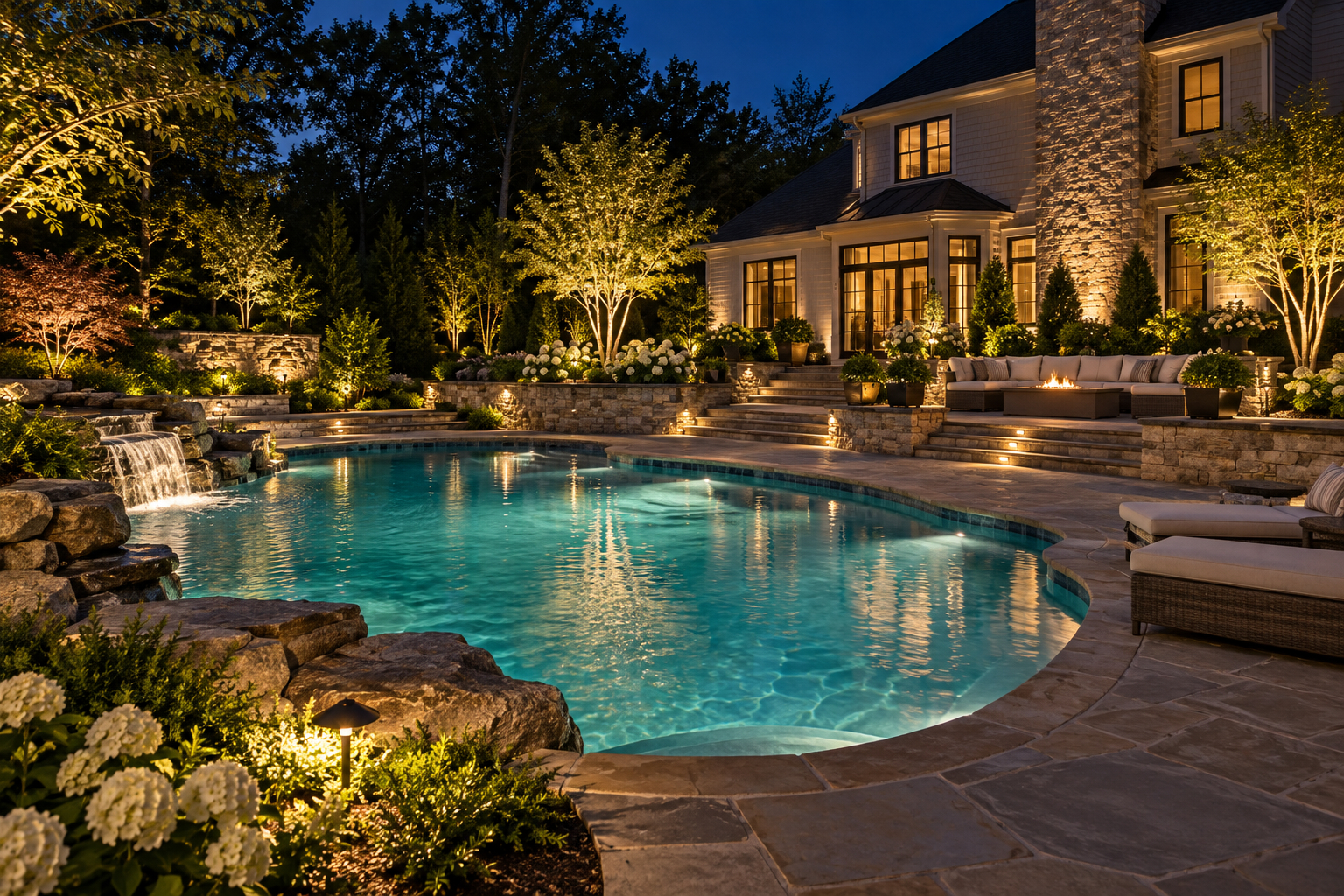
Tell us about planned patios, new planting beds or a future pool-area project. Reserving suitable capacity and sensible routes can help, but later additions still depend on equipment limits and compatibility. Ask what is included now and what would be needed later.
Check The Nighttime View Across Zone Boundaries
A zone should make sense visually as well as technically. If the front walk stays on while every surrounding area switches off, does the result still feel comfortable? If the patio remains lit, can guests see the route back to the house?
Review combinations after dark. Adjust aiming and output where supported, and avoid using a brighter setting to compensate for a missing fixture in the wrong location. Good control complements good design.
Common Questions
Can my existing system be divided into zones?
Sometimes. It depends on the wiring and equipment already installed. An assessment is needed before promising an app-only upgrade.
Does zoning save electricity?
Turning unneeded areas off can reduce runtime and energy use. The actual difference depends on fixture wattage and your previous schedule; there is no universal savings percentage.
Do I need color-changing lights?
No. Our landscape design focuses on warm-white lighting with appropriate timers and zones. Permanent roofline lighting can provide color separately if you want it.
A Lighting Plan For Your North Jersey Home
The Real Houselights of NJ serves Bergen, Passaic, Essex and Morris counties, plus Rockland County, NY. Tell us what you want to light, the areas you use most, and your project budget. We’ll review your priorities and recommend a practical design for your property.
Start with your ideas. Build around your budget.