First, Get To Know Your Roof
“Light the roof” can mean a simple front outline or a layered display that reveals the entire shape of your home. Knowing the parts makes it easier to compare options—and understand why two designs can look very different even on the same house.
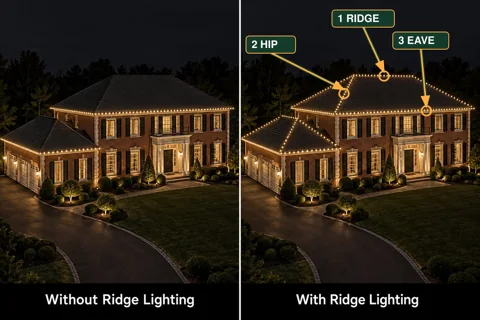
A roofline is the visible outline we follow along the edge of a roof. A ridge is the highest horizontal line where two roof slopes meet. A hip is a sloping outside corner where two roof faces meet. A gable is the triangular end of a roof; its sloping edges are different from the horizontal ridge behind it.
Ridge, Hip & Eave
Front-Facing Gable
Dormer
Two-Level Roofline
The diagrams are simplified illustrations, not measurements of a particular home. On your actual house, some lines may be hidden from the street, behind trees, or at an angle where they contribute less to the finished display.
The Front Roofline: The Foundation Of The Display
A clean front roofline is the most natural place to begin. Consistent bulb spacing and direction turn the outline of your home into a strong, readable shape after dark. Gutters, horizontal eaves, and front-facing gable edges can all contribute to that outline; the proposed coverage should identify the actual runs included.
Simple does not have to mean plain. A carefully fitted front outline can look more polished than a larger installation with sagging wire, uneven spacing, or mismatched light colors. If you are prioritizing your budget, establish this clean foundation before adding isolated accents elsewhere.
Roof Ridges & Roof Hips: Give The Roof Its Full Shape
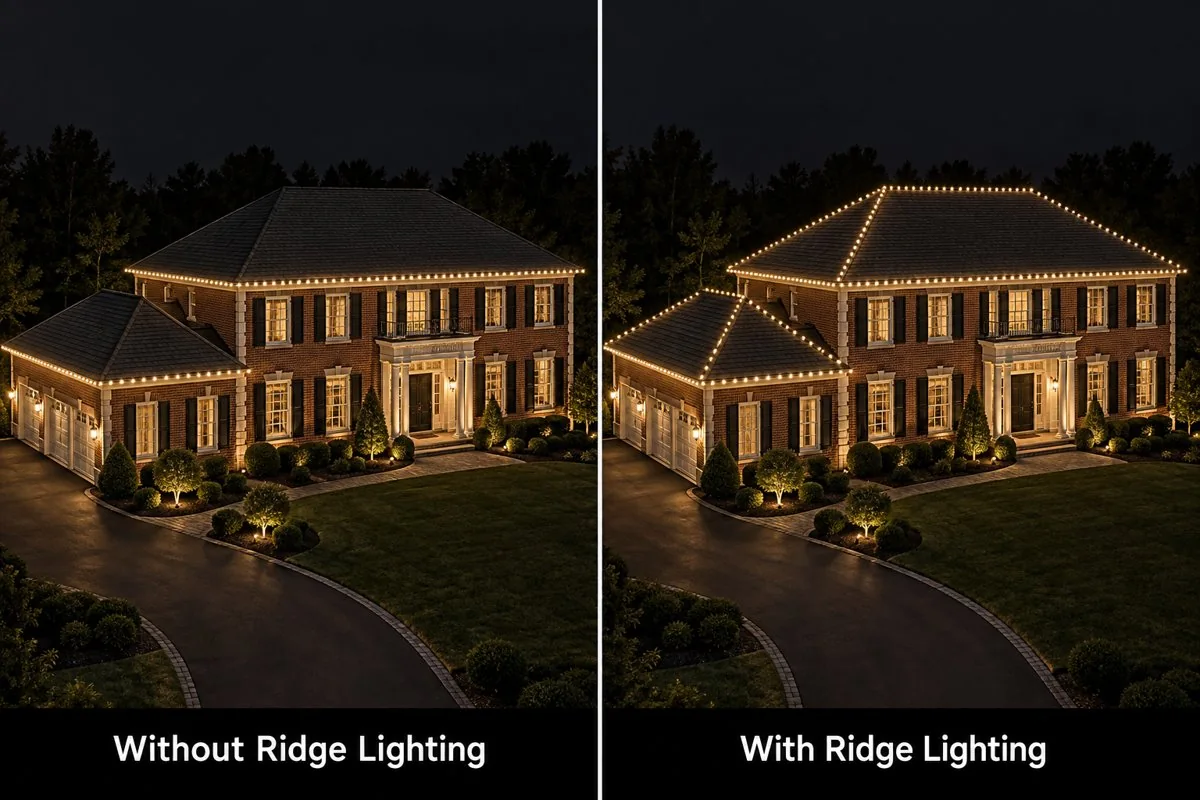
From the street, an unlit roof can disappear into the night above a glowing lower edge. Ridges draw your eye to the top of the structure. Hips connect those high points to the lower corners, helping the roof read as a three-dimensional shape.
This upgrade is especially effective when the roof is broad, the upper lines are clearly visible, or the house sits back from the road. On a roof largely hidden by trees or a steep viewing angle, another enhancement may offer more visible impact. We want the extra lighting to be something you actually see.
Choose this next when: you like the front outline but want the house to look taller, more complete, and more impressive as you approach.
Dormers, Gables & Two-Level Rooflines
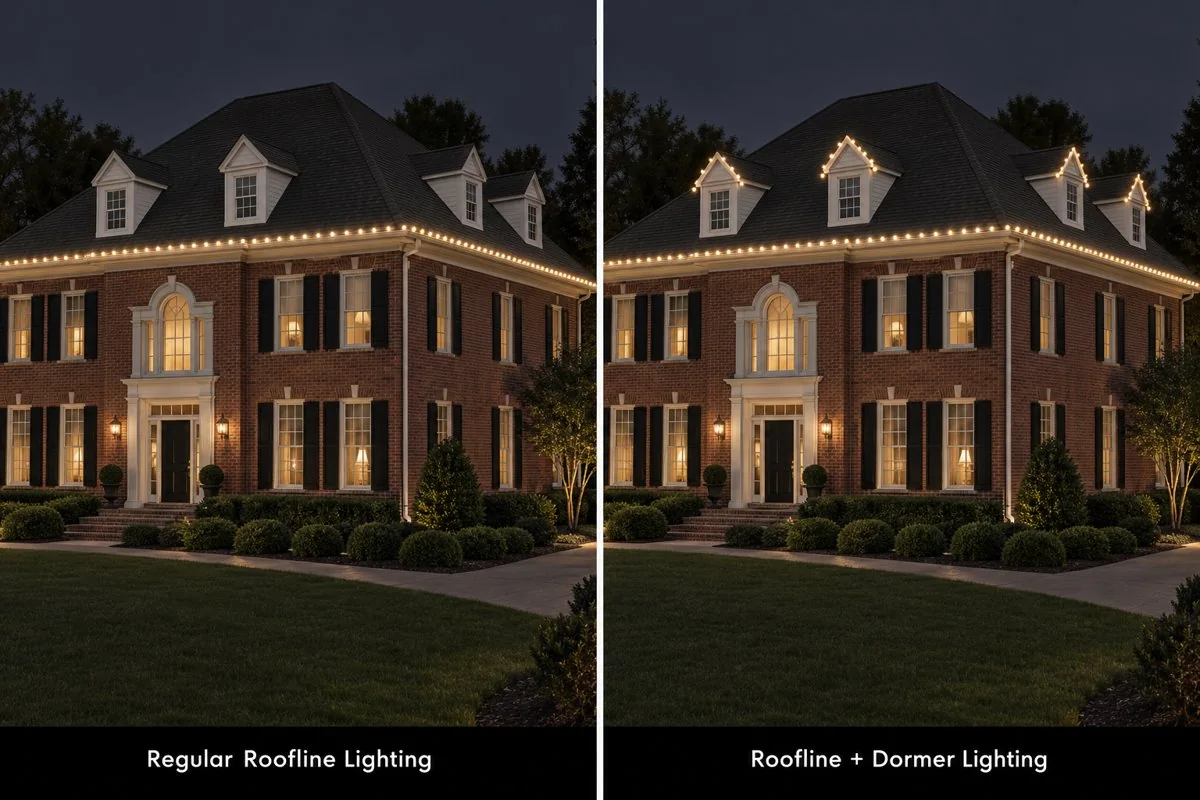
A dormer projects out of a sloped roof and usually contains a window. It has its own small roof, which can create a charming peak or outline within the larger roof. Outlining these features helps prevent the upper part of the home from feeling empty.
A front-facing gable may be much larger and form part of the main house. Lighting its sloping edges emphasizes that triangular shape. A dormer and a gable are not interchangeable, so your design should account for the features actually on your house.
A two-level roofline means there are distinct visible roof runs at different heights—for example, a lower garage or porch roof beneath the main upper roof. Lighting both establishes layers and ties the lower portion to the taller structure. It does not mean every two-story house automatically has two separate front rooflines.
When comparing designs, look for lower porch edges, garage roofs, upper eaves, and dormer outlines. The useful question is which visible lines complete the composition, rather than simply how many lines can be added.
Side Rooflines: Make The Arrival Part Of The Show
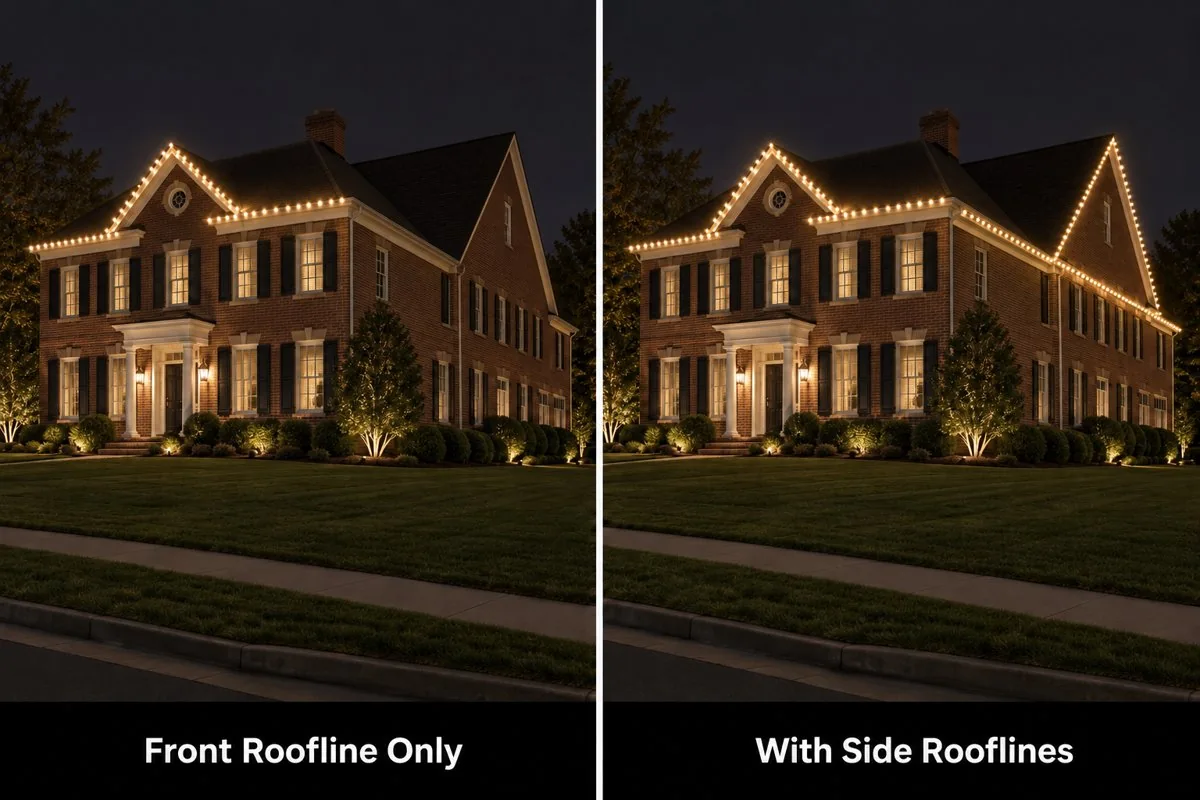
Most people do not first see a house straight on. They approach along the street, pull into the driveway, or walk up from an angle. Side roofline lighting keeps the display from ending abruptly at the front corner.
Think about the direction guests approach, whether your property is on a corner, and which side is visible from the driveway. One strategically chosen side can add more impact than a feature hidden from the usual viewing angle. Both sides create a more complete wraparound effect when the property is visible from both directions.
Why Upper-Roof Lighting Requires More Planning
Ridges, hips, dormers, and upper roofs can involve much greater fall exposure and more difficult access than a reachable gutter edge. Roof pitch, surface condition, fragile materials, gutter guards, landscaping, and weather all affect the installation plan. The added work is about reaching the right locations safely and leaving the roof in good condition—not just adding more bulbs.
Different surfaces require compatible attachment methods. Ridge-specific clips are designed for roof-cap applications; gutter or shingle-edge clips serve different purposes. We assess the roof and select appropriate mounting hardware and access equipment. We do not treat every clip as suitable for every roof.
The visual result can absolutely be worth the additional planning: a roof that once read as a flat outline becomes a layered holiday centerpiece. The right choice is the most effective design that can be installed appropriately on your particular home.
Further reading: Roof-specific clip guidance from Christmas Designers.