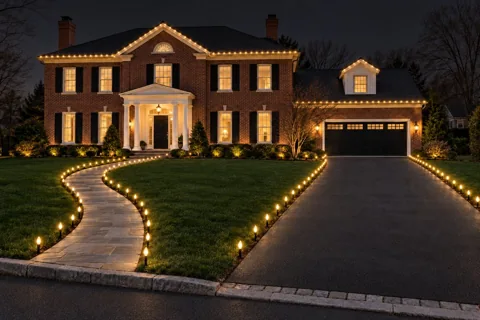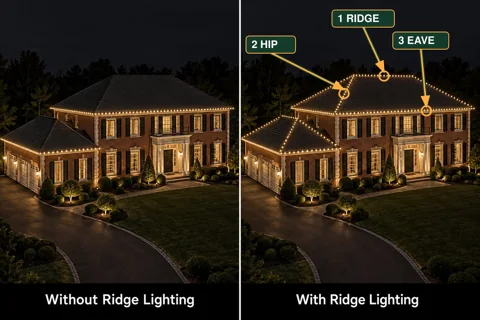
Give The House A Setting, Not Just An Outline
Roof lighting draws the eye upward. Trees and shrubs bring the display into the property around it, adding depth, texture, and a welcoming glow closer to the street. A few thoughtfully selected plants can make the home feel part of a complete holiday scene.
Each plant contributes differently. Low shrubs create a foundation beneath the house. Evergreens become illuminated sculptural shapes. Bare branches reveal the structure of a tree against the night sky. The goal is to use those differences together, rather than apply the same wrapping style to every plant.
Start with the strongest viewing angle. A tree near the driveway, a symmetrical pair beside the front door, or a row of shrubs beneath the windows may contribute more than a larger tree hidden at the edge of the property.
Use Santa To Choose Your Shrub Size

Our shrub categories are deliberately easy to picture: knee-high or wide, waist-high or wide, and shoulder-high or wide. Look at the plant’s broader dimension. A low shrub that spreads several feet across is not the same amount of lighting as a small, compact ball.
The Santa comparison helps you select an approximate size without needing a landscape survey. Count individual shrubs where they are clearly separate. For a continuous hedge or unusually broad planting, include a photo so the actual coverage can be reviewed.
Even coverage matters as much as the count of bulbs. A finished shrub should glow as a complete shape, with consistent density across the visible sides. A row of similarly sized shrubs benefits from matching light spacing and brightness so one plant does not overpower the rest.
Evergreens: Wrap The Shape Of The Tree
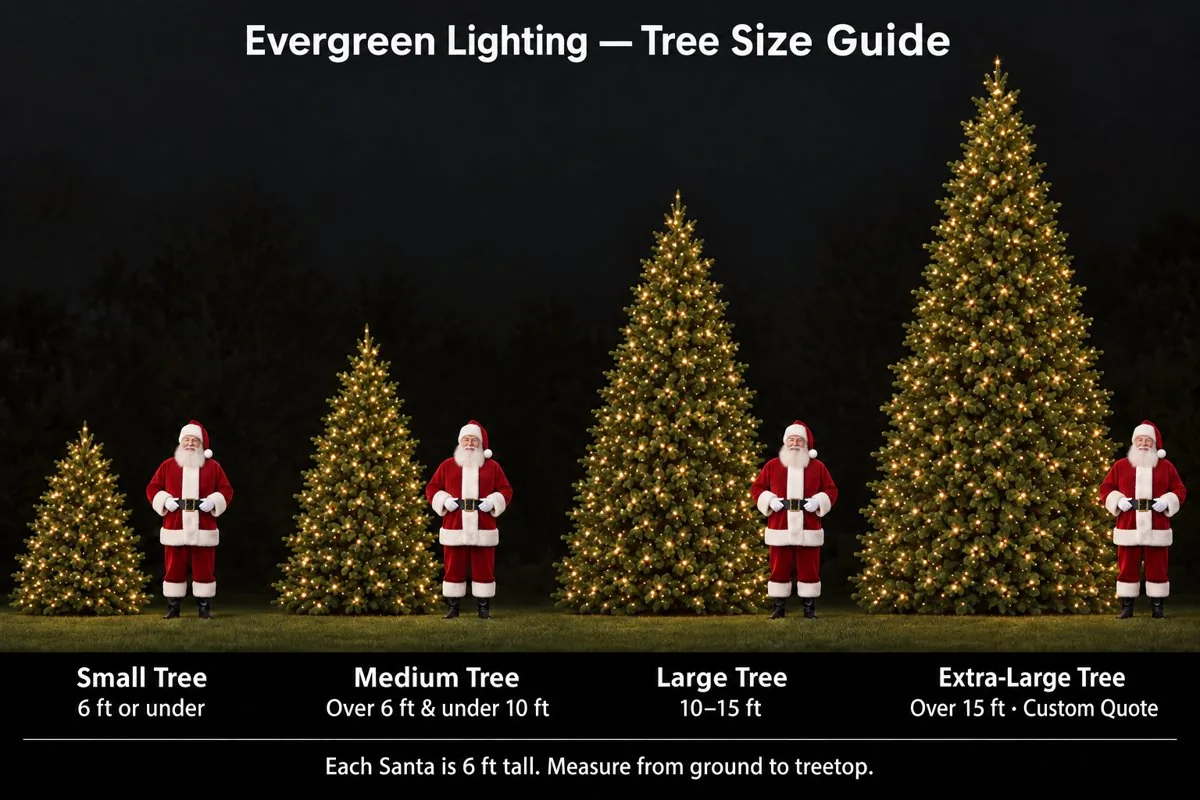
Evergreens hold their needles and foliage through the holiday season. The classic treatment is a wrap that follows the tree’s shape, distributing lights through and around the visible greenery. On a conical evergreen, that can create the familiar outdoor Christmas-tree silhouette.
Height is a helpful first guide, but width and density also affect how much lighting is needed. A broad, full spruce can require a different plan from a narrow evergreen of the same height. A tree visible from the street and driveway may need broader coverage than one viewed mainly from the front.
The size illustration distinguishes small trees up to six feet, medium trees above six and below ten feet, large trees from ten to fifteen feet, and extra-large trees above fifteen feet that need a custom review. Photos help us confirm the shape, access, and desired coverage.
Deciduous Trees: Follow The Trunk And Branches
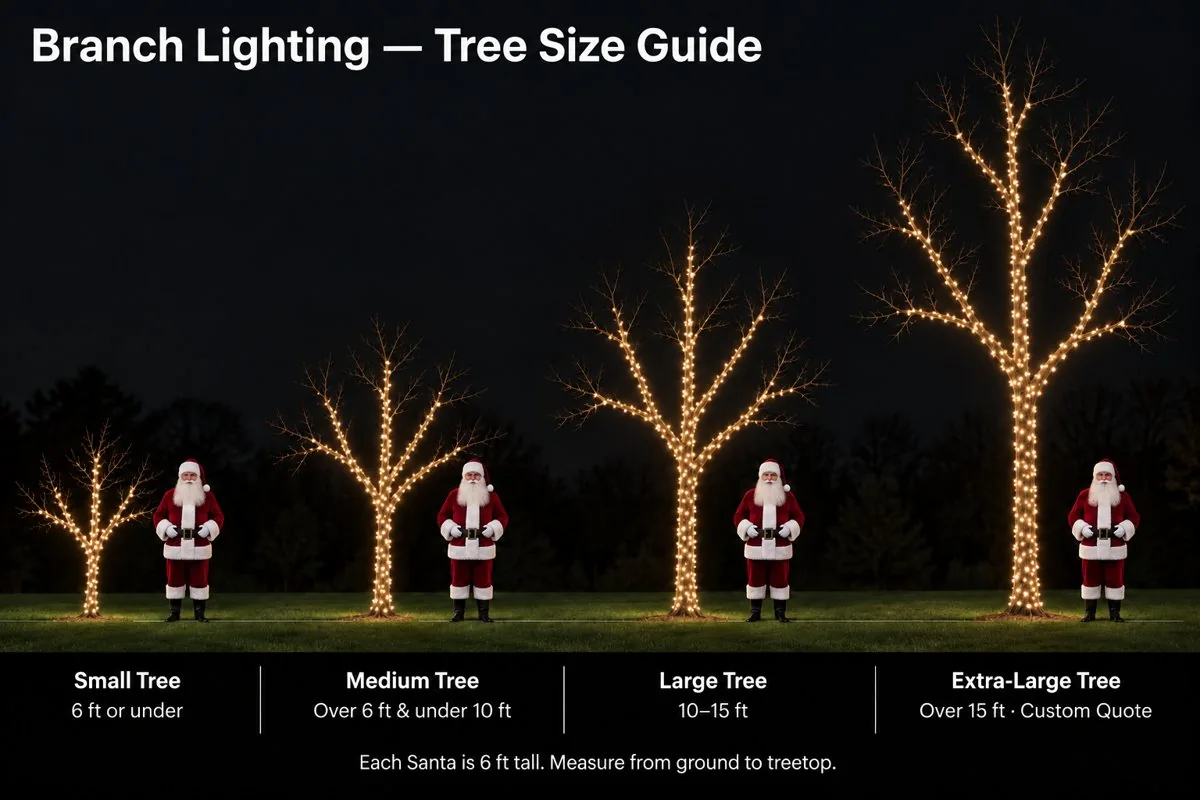
When a deciduous tree loses its leaves, its branching pattern becomes the feature. Wrapping the trunk and selected branches highlights that structure, creating a dramatic shape that reads clearly against the night sky.
Branch lighting is a different design from wrapping an evergreen. The amount of coverage depends on trunk circumference, the number and thickness of branches, how far out the wrap extends, and access—not height alone. A light trunk-and-main-branch treatment looks different from a dense wrap reaching further into the canopy.
We review the tree’s condition and accessible branches, and plan the installation without treating delicate growth as an attachment point. Larger or more complex trees can require specialized access equipment and a custom scope. A photo and a clear discussion of density help you compare proposals fairly.
Matching Color And Reliable Materials Make The Difference
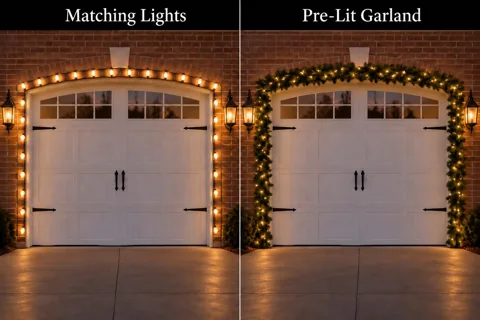
A roof, shrubs, and trees should look like one intentional display. Mixing several “warm white” sets can produce noticeably different shades. In a multicolor scheme, a consistent palette and repeated pattern keep the yard connected to the house. Matching brightness also helps a single tree avoid overwhelming the rest of the scene.
We use commercial-quality lighting selected for professional seasonal installations. That means paying attention to the actual product: outdoor suitability, wire and connector construction, serviceability, consistent color, and secure installation. “Commercial grade” by itself is not a universal performance certification.
Big-box stores sell products at many quality levels, and some retail lights are perfectly suitable for their intended use. The challenge with assembling a display from unrelated sets is consistency: different shades, brightness levels, replacement parts, connection limits, and weather suitability can make the installation harder to maintain.
Better equipment and careful installation reduce avoidable problems, but no honest installer can promise that a light will never fail. Inspecting the equipment, protecting connections appropriately, following product ratings, and planning service access all help prevent a small issue from spoiling the display midway through the season.
Product-safety background: CPSC guidance on seasonal and decorative lighting.
Choose The Upgrade With The Biggest Visible Impact
For a welcoming foundation, start with the shrubs beneath the front windows or along the entry. For a strong focal point, choose one prominent evergreen or a beautiful branching tree. For a more immersive display, combine low shrubs with one taller feature so the lighting has more than one level.
Then connect those features to the house with a consistent color scheme. Ground-stake lighting can add the final link from the curb to the front door; our driveway and walkway guide explains how that layer completes the scene.