The Layer That Makes A Holiday Display Feel Complete
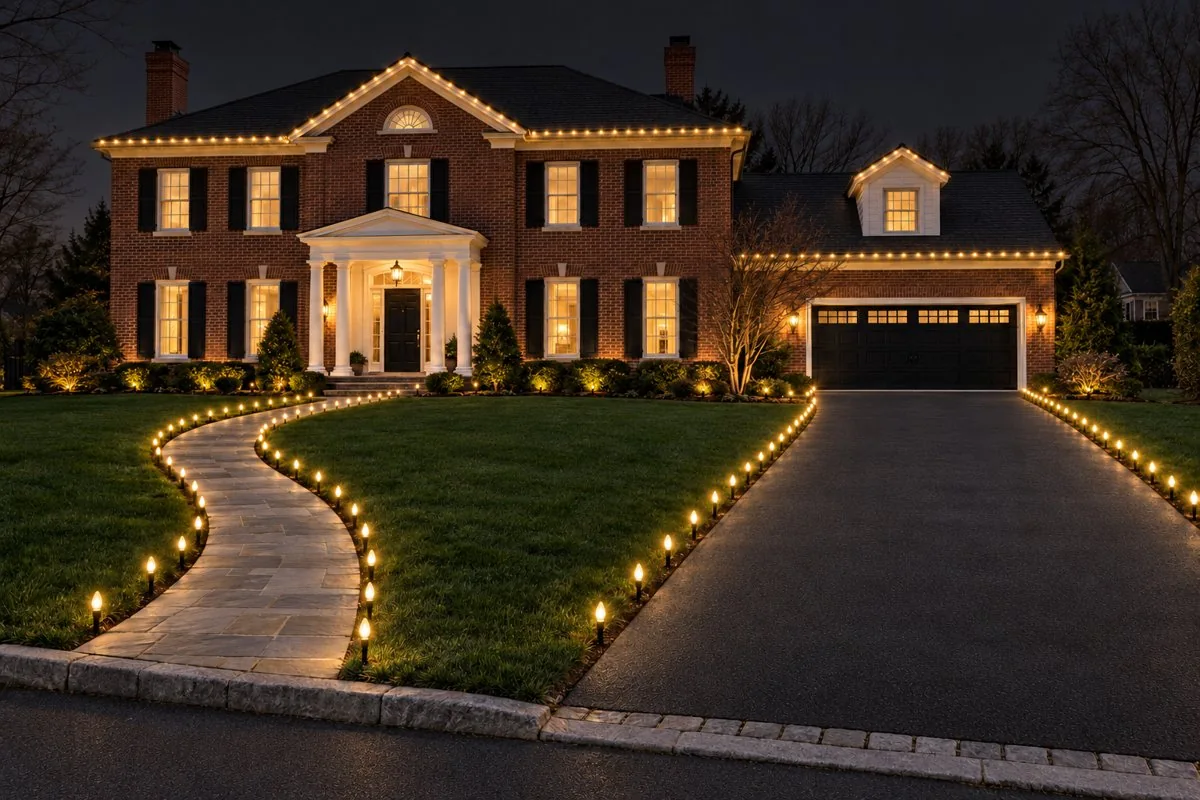
A bright roofline against a dark yard can look like it is floating above the property. Ground-stake lighting gives the composition a foundation. It leads the eye from the street into the scene and makes the distance between the curb and the house part of the display.
This is one of the clearest ways to add a third dimension to holiday lighting. Rooflines establish height, trees and shrubs add volume, and lighted paths draw lines through the foreground. Together they give the house a setting rather than leaving it as a bright outline at the back of a dark space.
The effect is especially noticeable on homes with a long approach, a curved walkway, a broad driveway, or a front yard that separates the facade from the road. You do not need to decorate every edge: one well-chosen route can give the eye a clear way into the design.
Walkway Lighting: Lead Guests Toward The Entrance
A lit walkway creates a visual invitation from the curb or driveway to the front door. Curves become an attractive feature after dark, while a straight path gains a crisp, purposeful outline. The bulbs should look evenly spaced and follow the route cleanly.
Lighting both sides can create a symmetrical, more immersive effect. In a tighter space, one carefully chosen side may work better around planting beds, steps, or everyday foot traffic. We look at the actual path and the main viewing angle before choosing the layout.
The strongest design connects to something at the destination: a matching front-door outline, pre-lit garland, a wreath, or a balanced pair of shrubs. That connection makes the walkway feel like the beginning of the display instead of an unrelated row of bulbs.
These are decorative holiday lights. They do not replace the functional lighting needed to see steps, changes in level, or walking surfaces clearly.
Driveway Lighting: Create A More Memorable Arrival
A driveway outline adds scale to the scene. Rather than seeing only a bright house at the end of the approach, visitors see the route leading toward it. Paired edges can frame the arrival; a single highlighted edge can still create a strong line when the property layout calls for it.
On a wide driveway, ground lighting helps the foreground feel intentionally decorated. On a curved driveway, it reveals a shape that may otherwise disappear at night. At the garage, coordinated light outlines or garland carry the same design language up onto the facade.
Coverage should follow the actual driveway, not a generic assumption. Length, curves, planting borders, parking habits, and the available mounting area all influence the plan. Photos showing the full approach are especially helpful when comparing a modest outline with a more expansive display.
Match The Roofline, Or Repeat A Deliberate Pattern
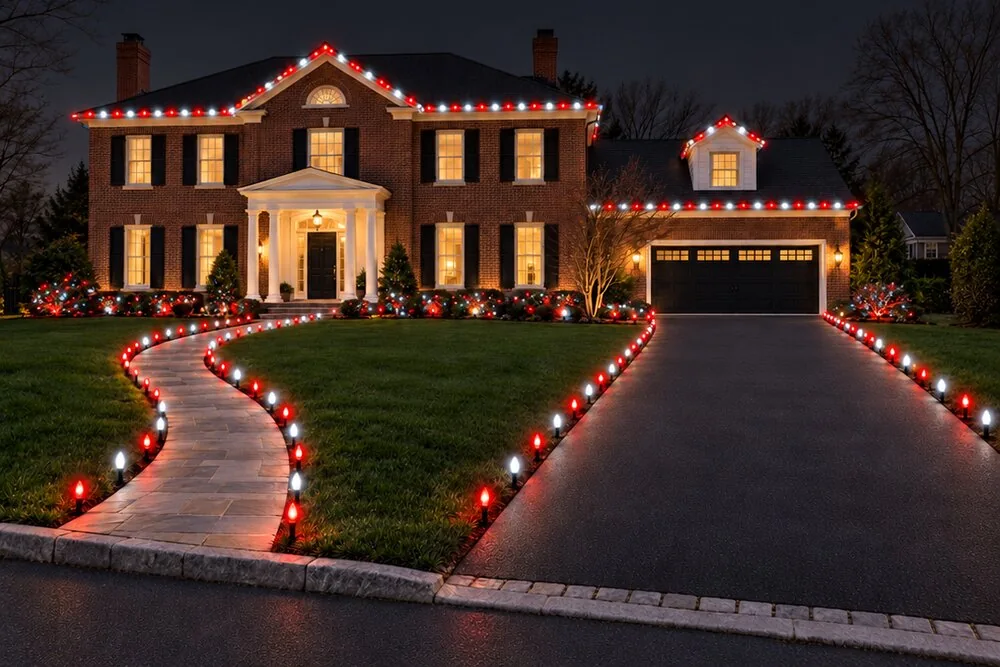
Warm white creates a clean, classic path toward the home. A red-and-white pattern can make the approach feel playful and festive. Multicolor can work beautifully when the same palette is repeated throughout the display.
Consistency is what keeps the result polished. Ground bulbs should relate to the roofline in color and overall brightness. Mixing a very blue white path with a soft golden roof can make two otherwise attractive sections feel disconnected.
Spacing contributes to the effect as well. A measured, consistent rhythm helps the line read smoothly from a distance, while sensible placement around corners keeps the route from looking interrupted. We plan the visual pattern and the physical layout together.
Designed Around The Way You Use Your Property
Ground-level decorations share space with people, vehicles, snow removal, pets, and landscaping. A useful plan considers those activities from the beginning. We position decorative runs in suitable bordering areas and keep the normal travel path in mind.
Driveway edges need to account for parking, turning, and snow-clearing equipment. Walkways need usable clearance. A neat nighttime effect is not enough if the daytime layout creates an obstacle. Changes in the property, newly planned landscaping work, or snow-removal arrangements are worth mentioning during the quote process.
Outdoor-rated equipment, appropriate connections, and a sensible power plan matter here just as much as on the house. Equipment must be used within its ratings, and damaged cords or light sets should not remain in service. Ground lighting can be exposed to moisture and physical contact, so thoughtful placement is particularly valuable.
Further reading: CPSC holiday decoration safety guidance.
A Simple Way To Build A More Complete Display
Start with the outline: establish the front roofline so the house has a clear shape. Connect the arrival: add the walkway or the driveway edge that people see first. Finish the destination: coordinate the entry, garage, or nearby shrubs with the same lighting palette.
If you already have a roof design you love, ground stakes can be a particularly rewarding next addition. They change the foreground and arrival experience without requiring you to rethink the entire roof. Trees and shrubs can then soften the space between the straight architectural lines and the ground-level route.
This guide covers seasonal holiday ground-stake lighting. Permanent landscape path lights are a different product and service. For your Christmas display, our quote tool keeps the seasonal options together so you can build one coordinated plan.