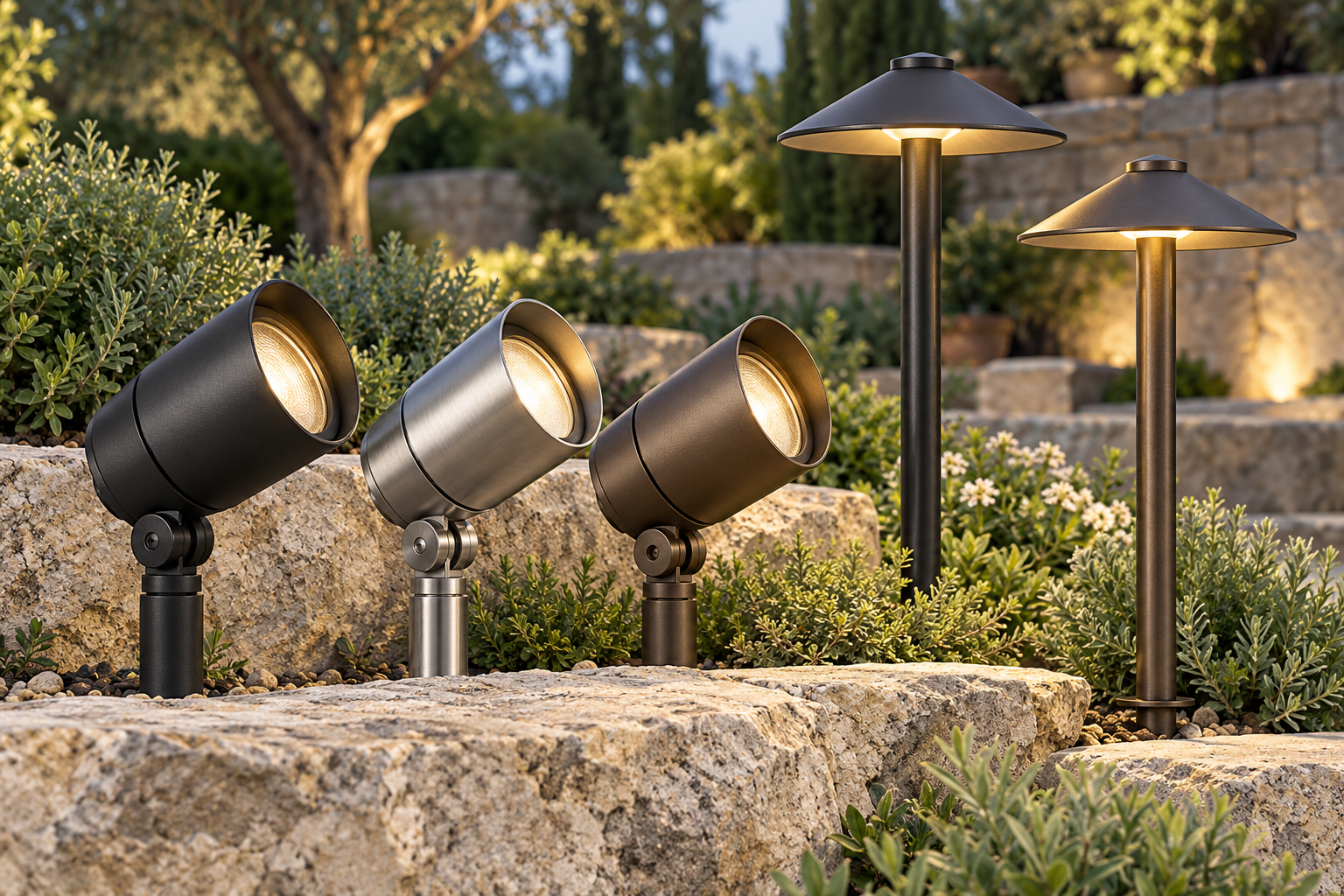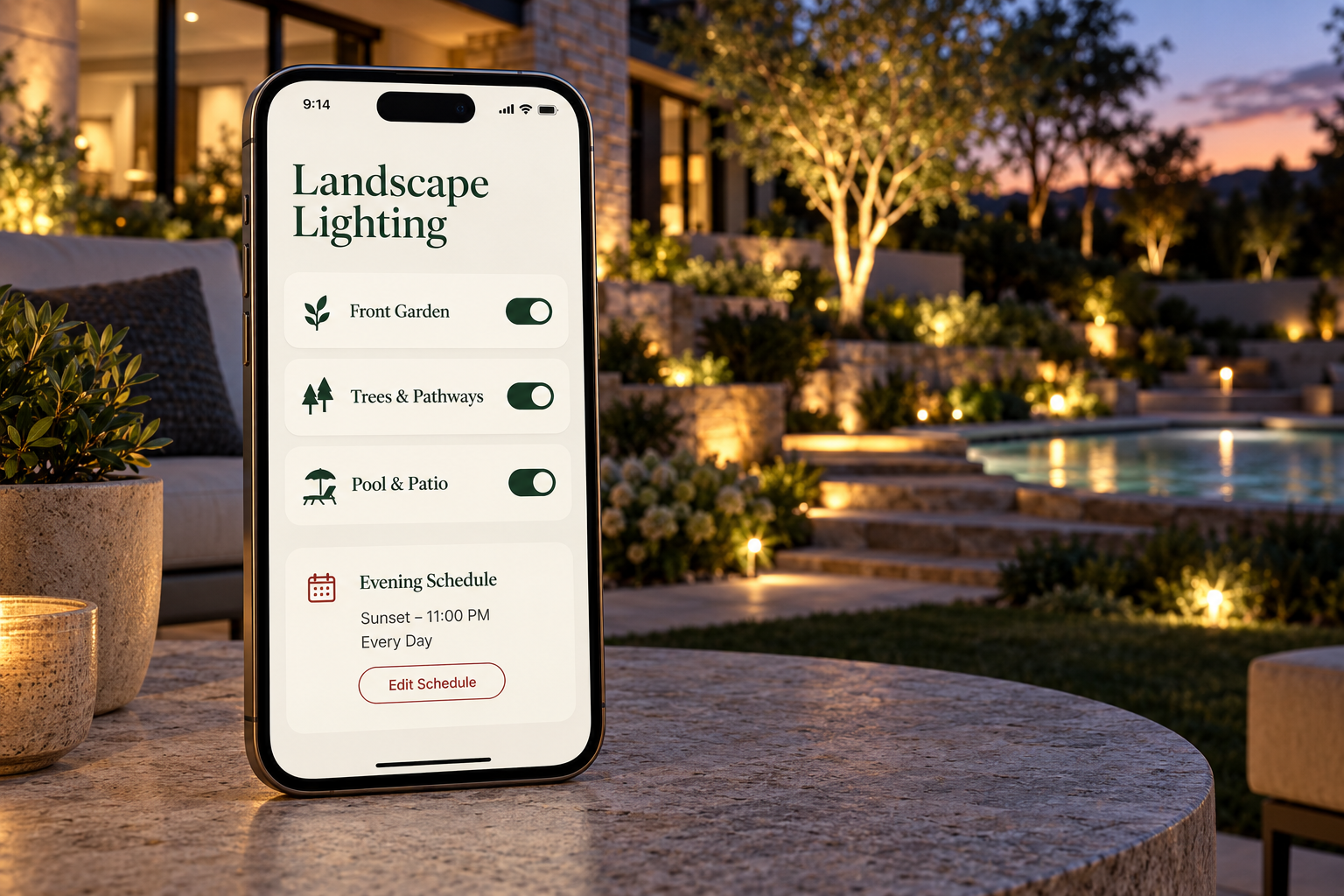
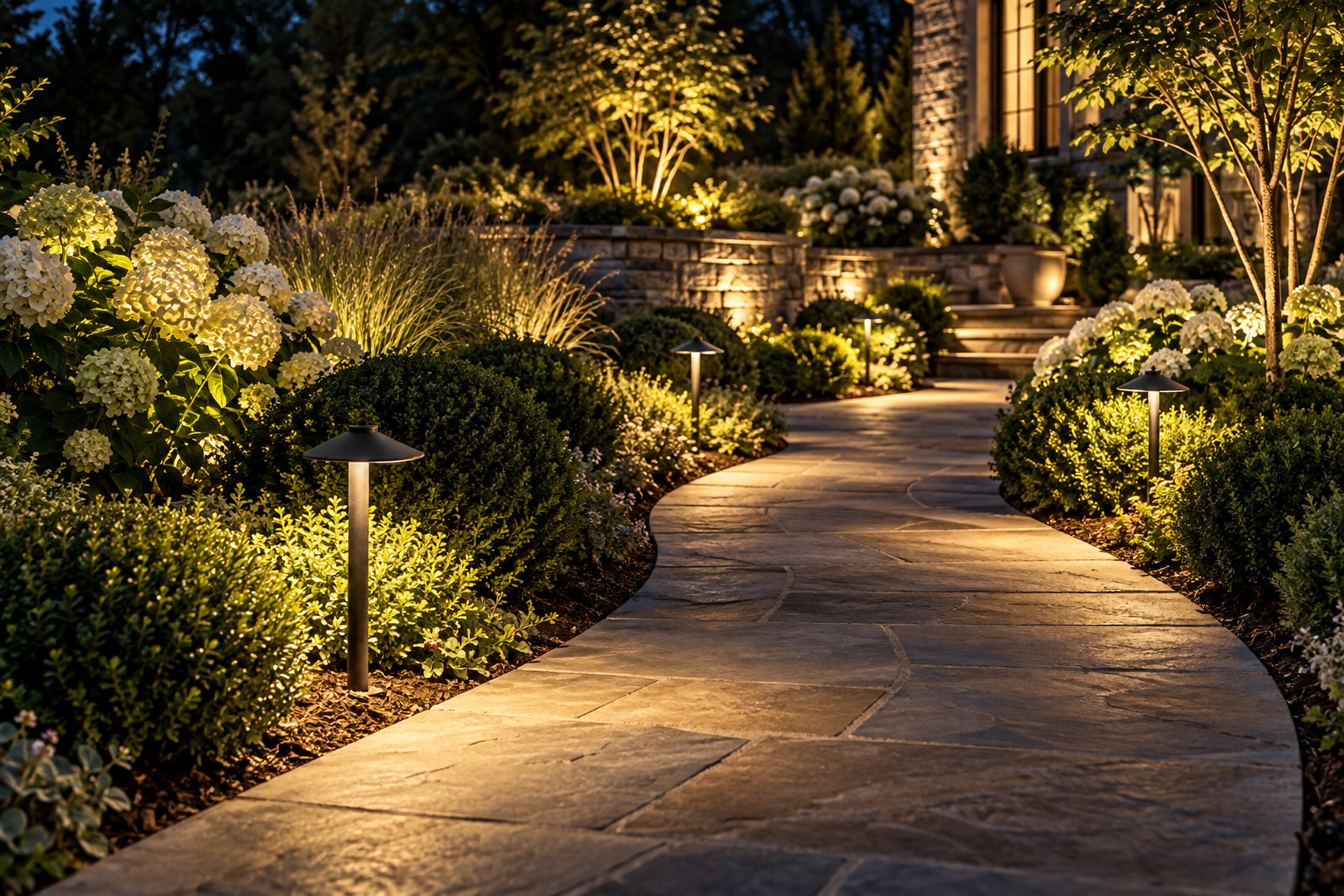
A yard can be brightly lit and still feel uninviting. One reason is the color of the light. Cool, bluish illumination can create a very different mood from the warm glow you associate with a porch, patio dinner or welcoming entrance.
For most residential landscape designs, warm white is our preferred starting point. It often complements the materials and atmosphere homeowners want after dark. But color temperature is only one part of the result: brightness, aiming and shielding matter too.
What Warm White And Cool White Mean
Correlated color temperature, usually shown in Kelvin or K, describes the apparent warmth or coolness of white light. A lower number generally appears warmer; a higher number appears cooler. It does not measure brightness.
| Approximate temperature | Typical appearance | Design consideration |
|---|---|---|
| 2200K | Very warm, amber-leaning white. | A softer evening feel where appropriate. |
| 2700K | Warm white with a golden quality. | A useful starting point for welcoming residential accents. |
| 3000K | Warm white, a little crisper. | Worth comparing against stone, siding and existing exterior lights. |
| 4000K–5000K | More neutral to cool/daylight-like. | A different visual mood; evaluate carefully around residential seating and windows. |
These descriptions are approximate. Two lights with the same rating can differ in tint and color rendering. Judge a sample on your property instead of expecting a number to tell the whole story.
Warm Light Often Sits More Naturally With Residential Materials
Brick, warm stone, wood and planting beds frequently look inviting under warm-white illumination. It can connect the yard with the porch and the light coming through the windows, helping the house feel like one scene.
A much cooler landscape system next to warm porch lights can create a patchwork effect. Occasionally that contrast is intentional, but more often homeowners prefer a coordinated appearance. Review the existing fixtures before selecting new ones.
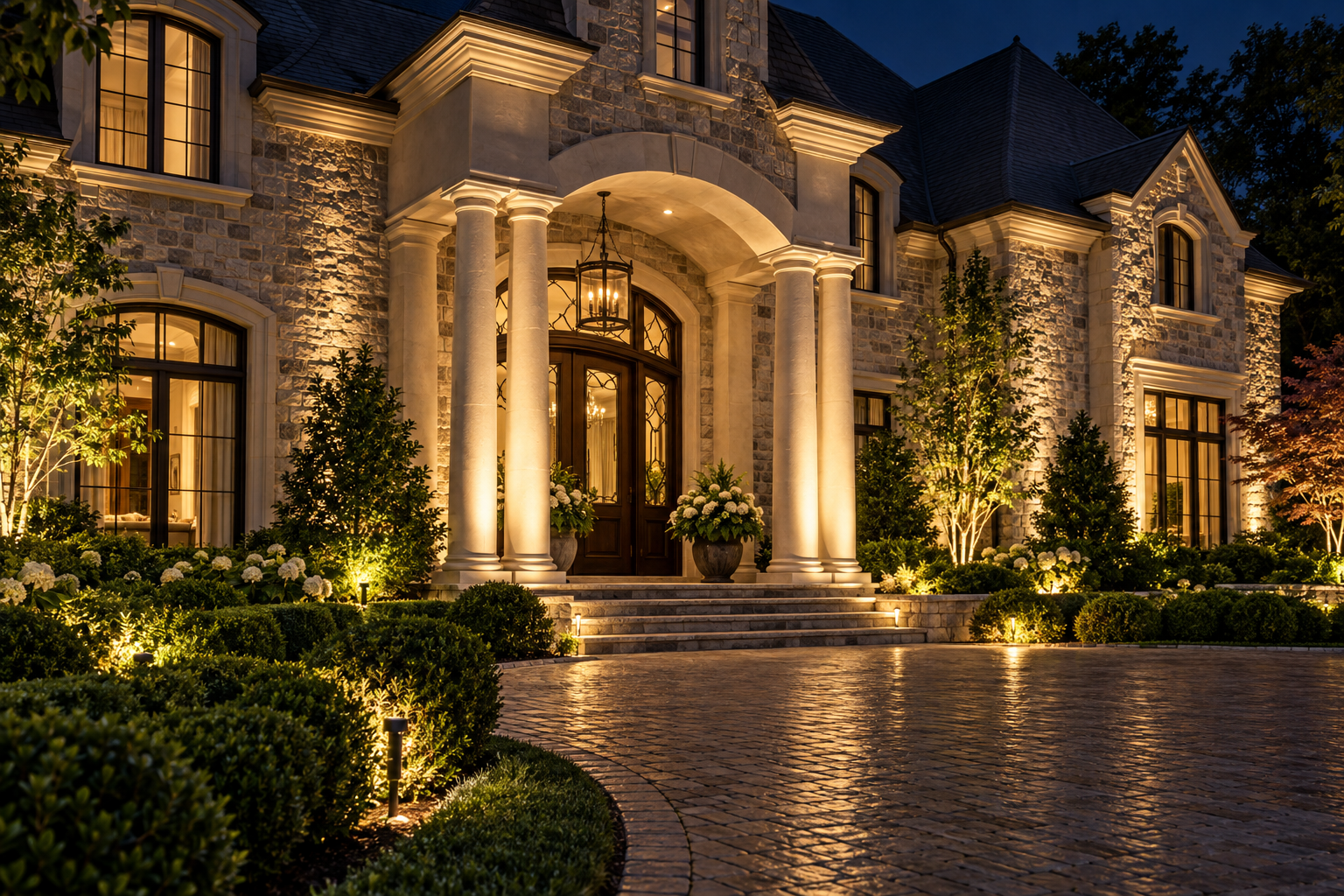
Modern homes are not automatically an exception. Pale stone, metal and crisp architectural lines can look excellent with warm light, especially when the beam is controlled and the brightness is restrained. Try the options against the actual finishes.
Warm White Is Not A Substitute For Good Aiming
A warm light pointed at your eyes is still uncomfortable. A bright exposed lens can distract from the tree or wall it was meant to highlight. Good shielding and positioning keep the focus on the illuminated surface.
Lower glare comes from the whole design: the visible light source, viewing angle, distribution and amount of light. Do not assume a warm color makes an overbright installation neighbor-friendly. Check the view from nearby windows and property boundaries.
Choose Light Thoughtfully After Dark
DarkSky International’s home lighting guidance recommends 3000K or lower for outdoor residential products. Its broader principles emphasize useful, targeted, low-level, controlled and warm-colored lighting. That supports a restrained approach rather than simply changing a cool bulb to a warm one and leaving it on all night.
For your yard, this means lighting the areas you use, keeping light within the intended feature where possible and scheduling decorative zones to turn off when they are no longer useful. Local conditions and any applicable requirements should inform the final plan.
Let’s plan your landscape lighting.
How To Choose Between Warm-White Options
- Start with the setting. Is this a front entrance, a quiet garden or an entertaining space?
- Compare against existing lights. Include porch, garage and nearby exterior fixtures.
- Look at real materials. Test the appearance on your stone, siding, wood and foliage.
- Review comfortable output. Evaluate the light from the places people stand or sit.
- Keep the palette consistent. Use differences intentionally rather than mixing products at random.
We usually begin the residential design discussion with warm-white choices and then refine them for the property. The aim is a home that feels welcoming after sunset, with enough definition to enjoy its features.
Common Questions
Is cool white always wrong outside?
No. Some tasks, settings or preferences call for a different approach. Warm white is a strong default for residential atmosphere, not a universal rule for every outdoor application.
Is warm white dimmer?
Not inherently. Brightness depends on light output and distribution. Kelvin describes color appearance; lumens describe emitted light quantity.
Will warm white make my house look yellow?
The effect depends on the chosen temperature, fixture and surface. Compare samples if you are concerned; 2700K and 3000K can look noticeably different on the same wall.
Can permanent lights match the landscape lights?
We can plan a coordinated appearance, but different products may not match perfectly. Evaluate their white settings together before assuming they are identical.
A Lighting Plan For Your North Jersey Home
The Real Houselights of NJ serves Bergen, Passaic, Essex and Morris counties, plus Rockland County, NY. Tell us what you want to light, the areas you use most, and your project budget. We’ll review your priorities and recommend a practical design for your property.
Start with your ideas. Build around your budget.