Bring The Holiday Display Down To Eye Level
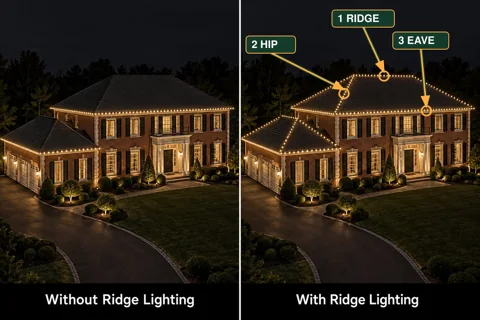
Your roofline establishes the shape of the house. Architectural enhancements bring the celebration closer to the people walking up to it. A framed entry, matching windows, a glowing garage outline, and a well-proportioned wreath can turn a strong roof design into a finished holiday scene.
The best result comes from choosing features that already give your home character. We look at symmetry, the main entrance, large blank areas, and the route from the driveway to the front door. More lighting is useful when it connects the composition; every feature does not have to be decorated equally.
A good starting point is one clear focal point at the entrance, followed by a matching feature on each side. If the garage occupies a large part of the street-facing facade, it may deserve attention before smaller windows.
Front Door Outlines: Crisp Lights Or Rich Greenery?
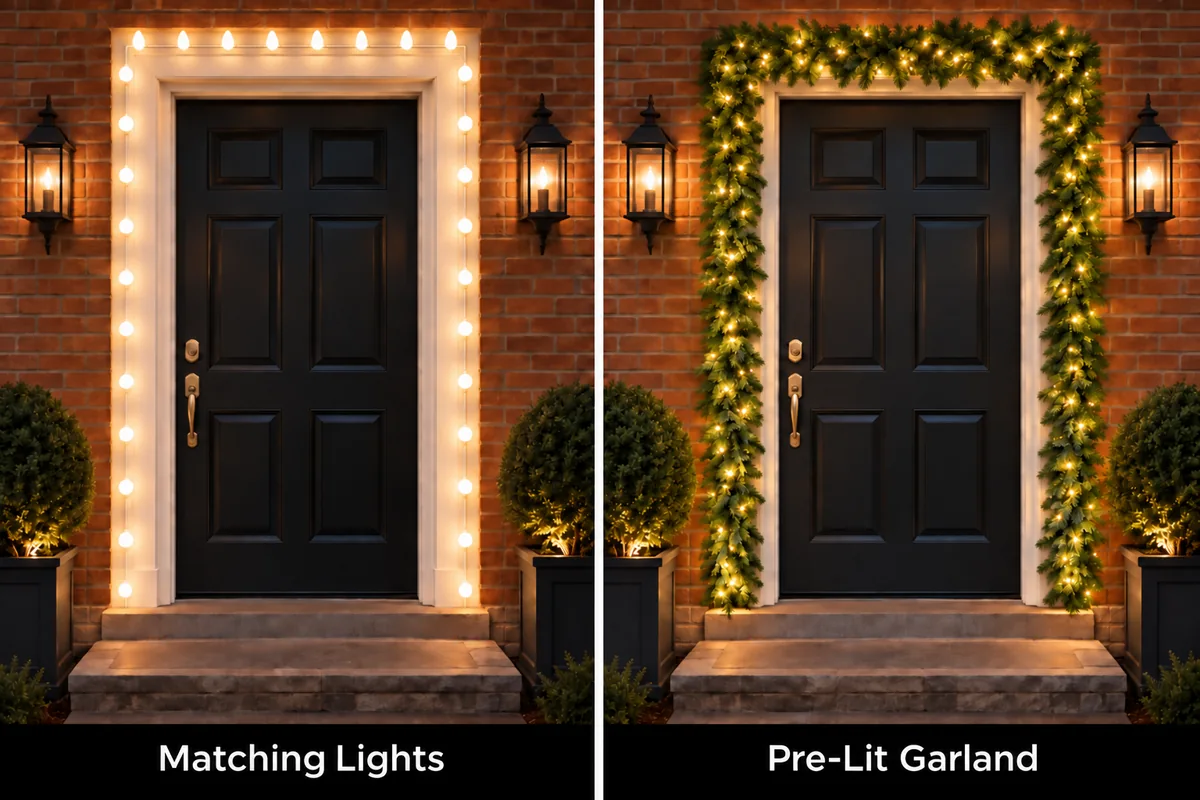
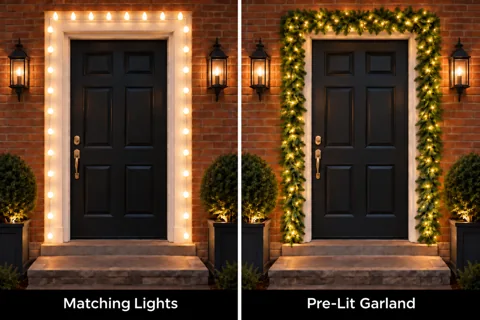
A light outline traces the entry with evenly spaced bulbs. It works well when you want a clean architectural finish that visually connects to the roofline. The scale and color of the lights should support the overall design rather than compete with it.
Pre-lit garland adds a fuller, softer frame. It creates a festive impression during daylight as well as after dark, and can make an otherwise simple doorway feel like the center of the display. It is especially effective alongside a coordinated wreath.
We plan the outline around the fixed trim, allowing the door to open and close normally. Sidelights, transom windows, unusual entry shapes, and covered porches all affect how the frame should be arranged.
Garage Doors: A Big Surface With Big Visual Potential
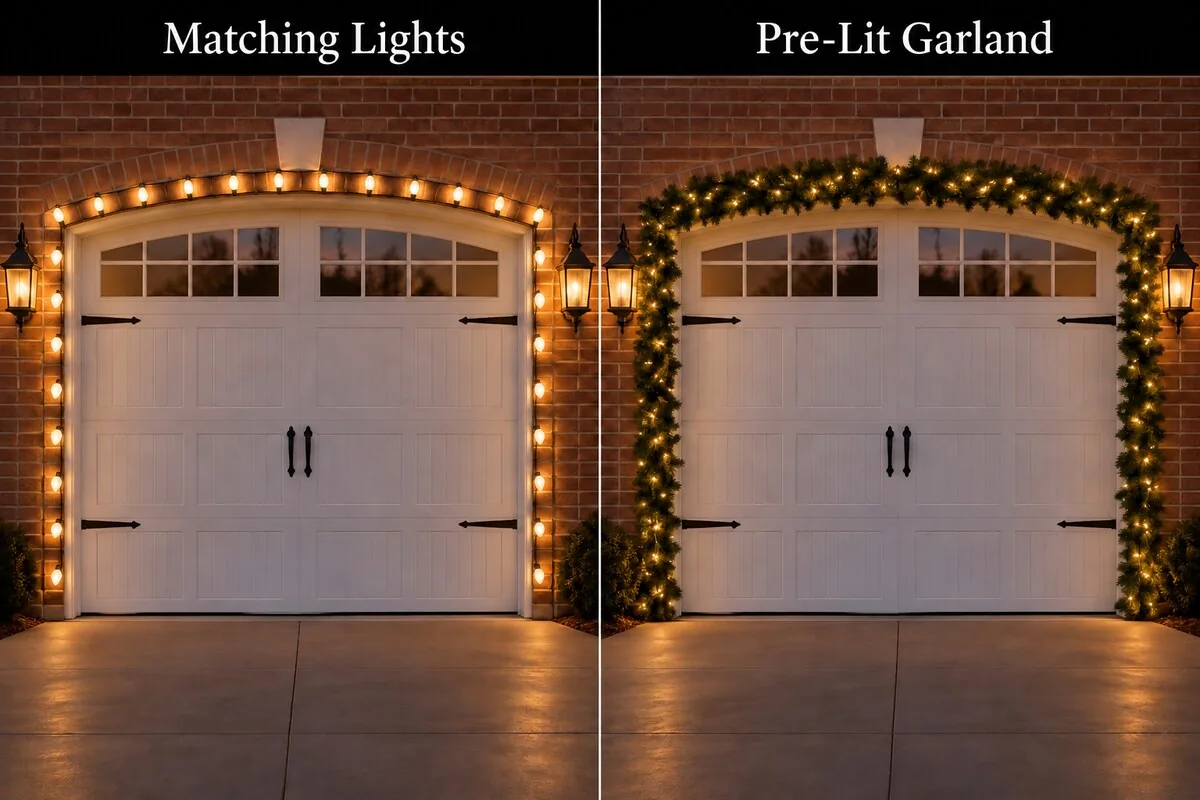
A garage can occupy as much visual space as the entrance and several windows combined. Leaving it dark beneath a bright roof may make the lower part of the house feel unfinished. Outlining the opening adds structure and carries the display toward the driveway.
Matching lights create a crisp rectangular or arched frame. Garland gives the garage a more substantial holiday treatment and can echo the front-door greenery. For multiple garage bays, repeating the same treatment helps the house feel deliberate and balanced.
The decoration belongs on appropriate fixed surfaces, with clearance for the moving door, tracks, seals, and sensors. We consider both the nighttime view and everyday use of the garage when laying out the installation.
Windows, Columns & Vertical Corners
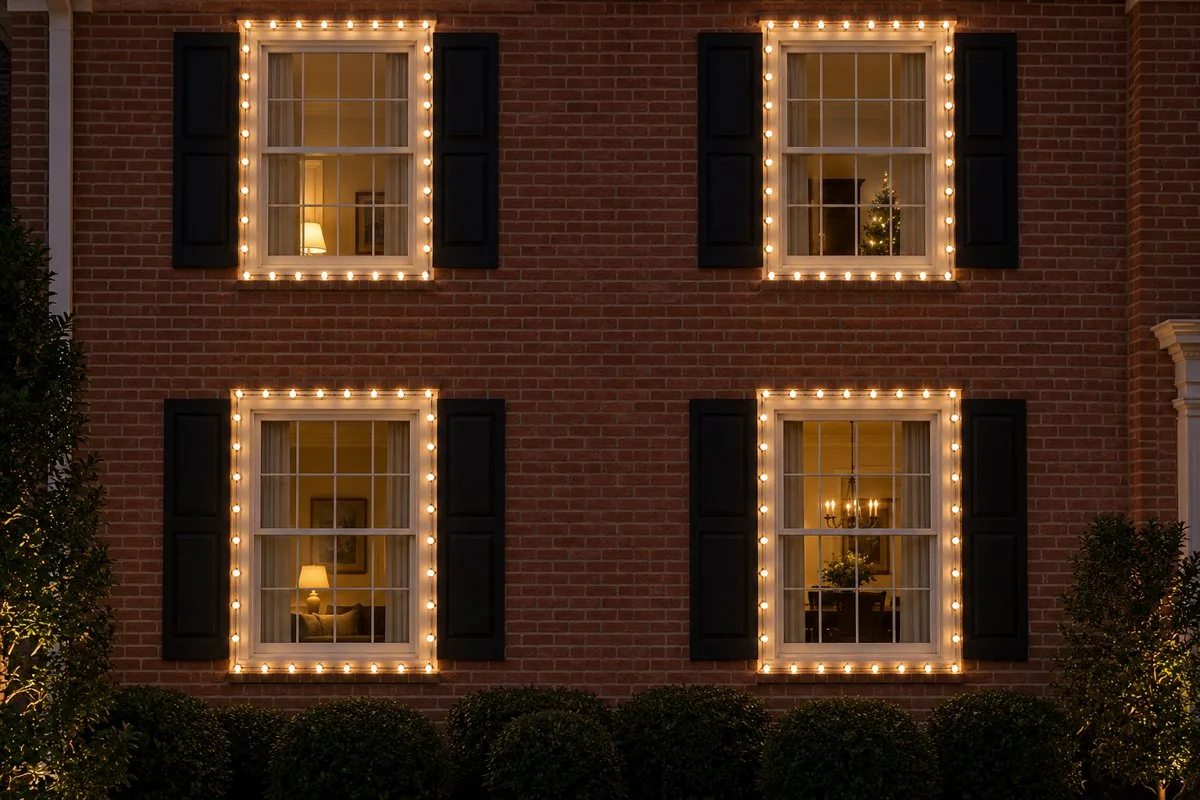
Window outlines repeat a shape already built into your architecture. A balanced group can create a more complete display than one isolated window. On a symmetrical home, paired windows are often a natural choice; on an asymmetrical home, we look for a visual balance rather than forcing every opening to match.
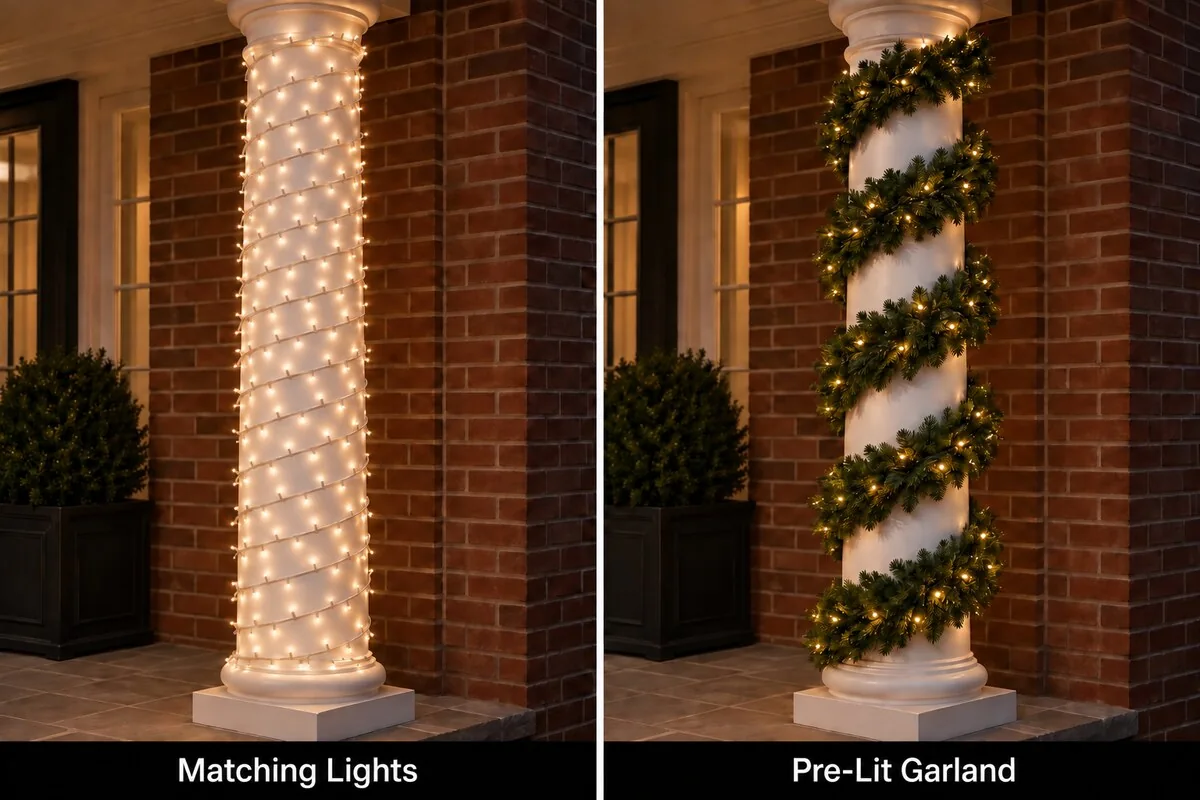
Column lighting brings depth to a porch. String lights create a lighter, sparkling effect, while pre-lit garland adds a thicker spiral of greenery. The number and height of the columns help determine how substantial that treatment should be.
Vertical corner lights connect the roofline toward the ground. They can make the home’s edges easier to read and visually tie separate roof levels together. They are particularly useful when the display already has strong horizontal lines but needs a few vertical connections.
Vertical Corner Edges: Define The Whole Shape Of The House
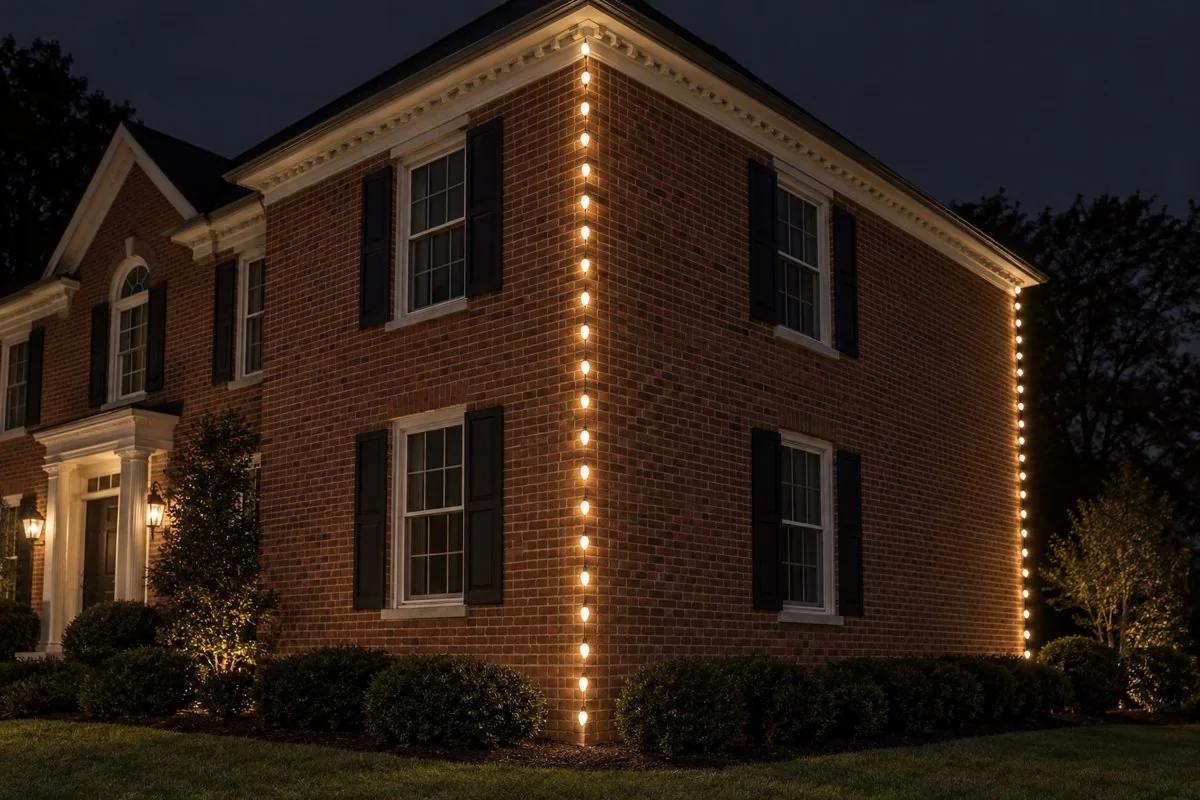
Vertical corner edges are the upright outside corners of the house where two exterior walls meet. Lighting these lines carries the display down from the roof and gives the facade a stronger frame. They are different from roof hips, which slope across the roof, and from window or door outlines, which frame individual openings.
At night, a roofline on its own can appear to float over a dark wall. Adding selected vertical corners visually anchors that upper outline and makes the house’s height and width easier to read. On a taller home, those vertical lines can be one of the most effective ways to balance a display dominated by horizontal roof runs.
The effect is especially strong from an angle. As drivers approach, an illuminated corner helps reveal the change from the front wall to the side wall, adding depth before they reach a straight-on view. Paired with side roofline lighting, it makes the display feel more complete around the turn.
We choose the corners that contribute to the overall composition instead of automatically outlining every wall edge. A pair of prominent front corners can create a clean frame; additional visible corners can connect an attached garage, projecting section, or side elevation. Matching color, bulb spacing, and brightness keep those lines coordinated with the roof.
A great next upgrade when: your roof looks beautiful but the front of the house still feels dark or visually disconnected below it. Try vertical corner edges alongside window or entry lighting to see which combination gives the strongest overall finish.
Garland & Wreaths: Choose Proportion Before Quantity
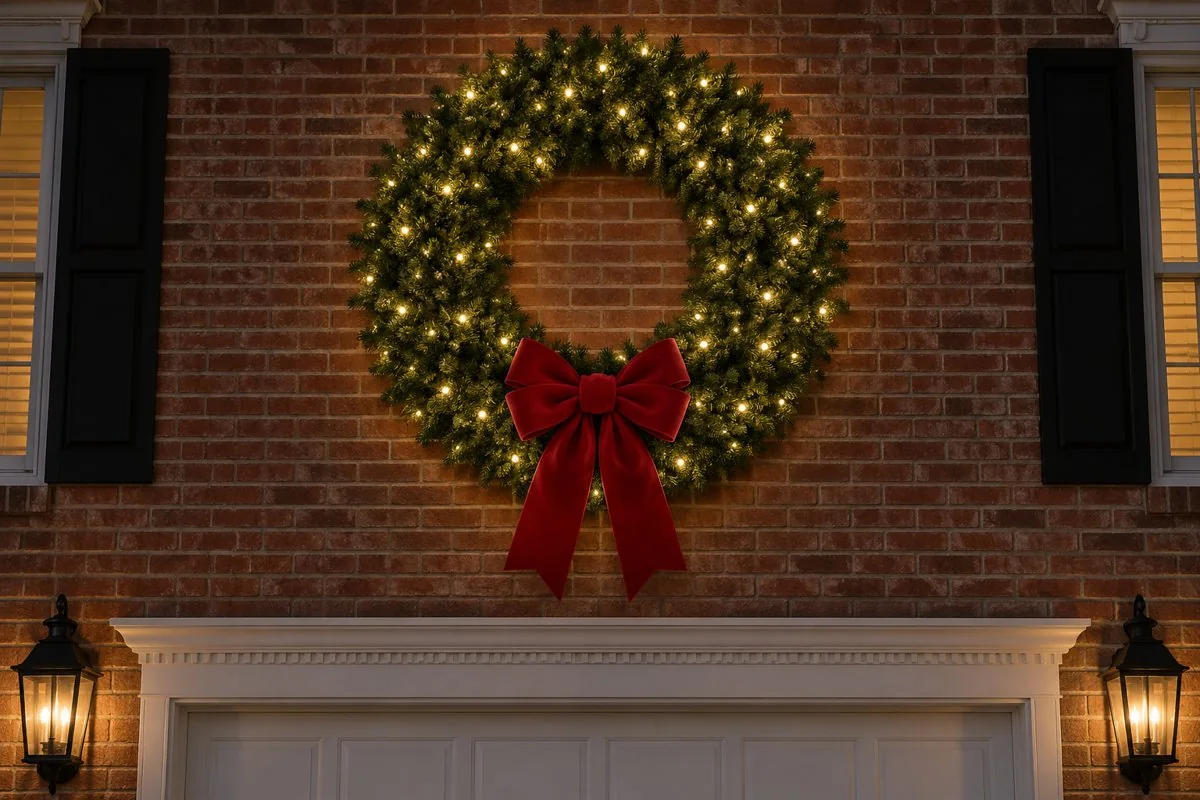
A wreath is a focal point. Above a garage, between upper windows, on a large gable, or at the front door, it gives the eye a place to rest. The right size depends on the surrounding wall area and viewing distance—not just which wreath looks impressive up close.
A small wreath can disappear on a tall facade. A very large wreath can overwhelm a narrow entry. We consider nearby trim, windows, door operation, mounting conditions, and how the wreath will look from the street before recommending a size.
Garland and wreaths work especially well together when their greenery, lighting color, and brightness feel coordinated. Repeating a similar treatment at the door and garage makes them feel like parts of one display. You can also choose one richly decorated entry and use simpler light outlines elsewhere to keep the design focused.
The Secret To A Finished Look: Coordination
“Warm white” is not always the same shade from one product to another. Differences in bulb construction, color temperature, and brightness can make the roof look golden while a wreath looks stark white. We aim for a coordinated appearance across roof bulbs, string lights, garland, and wreaths.
For a candy-cane or multicolor display, consistency matters just as much. Repeating the same palette and color rhythm makes the accents feel intentional. A controlled design can still be playful; it simply avoids looking like unrelated sets were added at different times.
If your budget allows one next step, start with the entrance or the largest unlit architectural opening. If you want a more complete finish, combine a focal-point wreath, a matching doorway treatment, and repeated accents across the facade.