A row of solar stakes and a professionally designed landscape system can both put light in a yard. The difference becomes clearer when you look at the materials, the quality of the light and how the system will be maintained.
Big-box stores carry a range of products, including metal fixtures and wired low-voltage kits. Some are useful for modest projects. The fair comparison is the specific equipment and installation scope, rather than assuming that everything sold at retail is disposable.
Look At What The Fixture Is Made Of
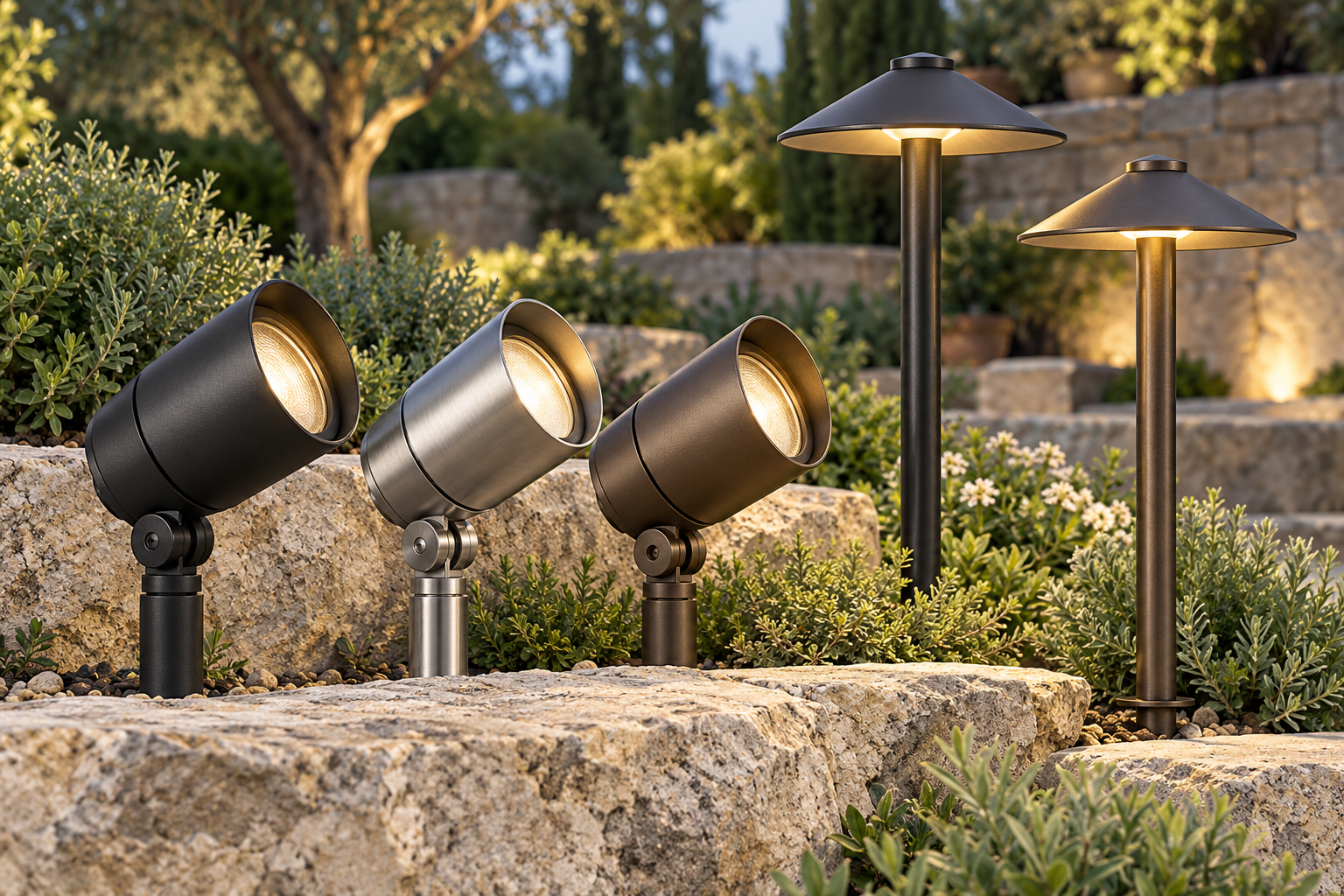
Plastic, thin metal and substantial cast housings can feel very different in the hand. Inspect the body, stake, adjustable joint, lens, seals and fasteners. A strong-looking head on a weak mounting stake is still vulnerable to leaning or damage.
Brass, copper, stainless steel and aluminum each have different appearance and maintenance considerations. Finish quality and the local environment also matter. “Metal” alone is not a complete specification, and a coating color does not tell you what is underneath.
Our professional landscape installations use durable metal fixtures selected for outdoor use, with styles and finishes suited to the project. Available finishes vary; ask to see the specific proposed fixture instead of choosing from a generic product photograph.
Durability Includes Where The Fixture Is Installed
A heavy housing can stand up better to ordinary yard wear than a lightweight plastic fitting, but it is not mower-proof or trimmer-proof. Hoses, edging tools and snow clearing all deserve a place in the layout discussion.
We plan fixture locations and stable mounting around routine landscaping. Keep enough clearance to maintain the bed, and show the lawn crew where fixtures and cable routes are located. Good placement protects the investment as much as a stronger material does.
The Beam Matters More Than The Fixture Count
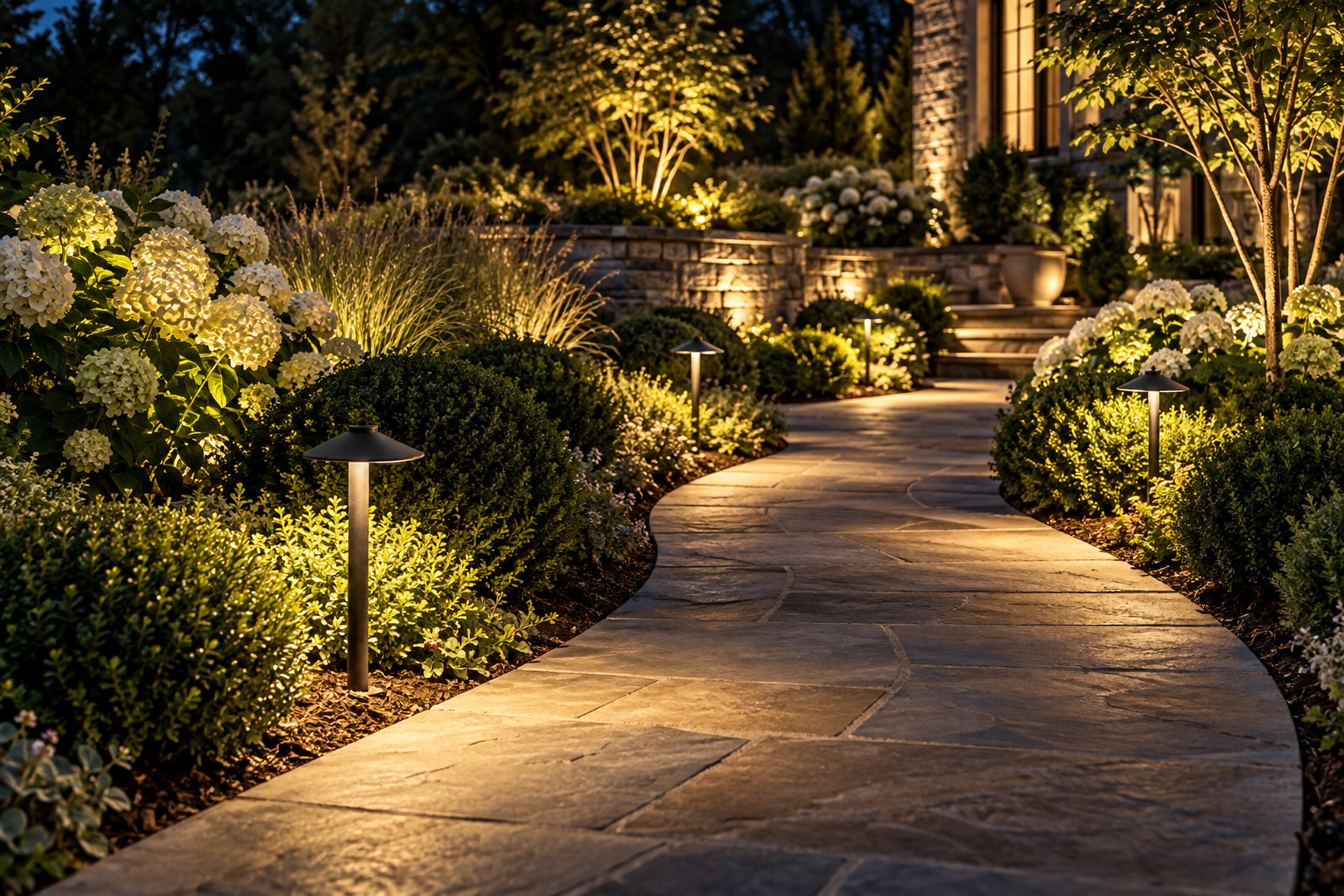
A bargain box with many identical lights may not match a property with tall trees, a broad wall, a narrow path and steps. Those subjects need different distributions. Beam control, aiming and shielding help place the light where it belongs.
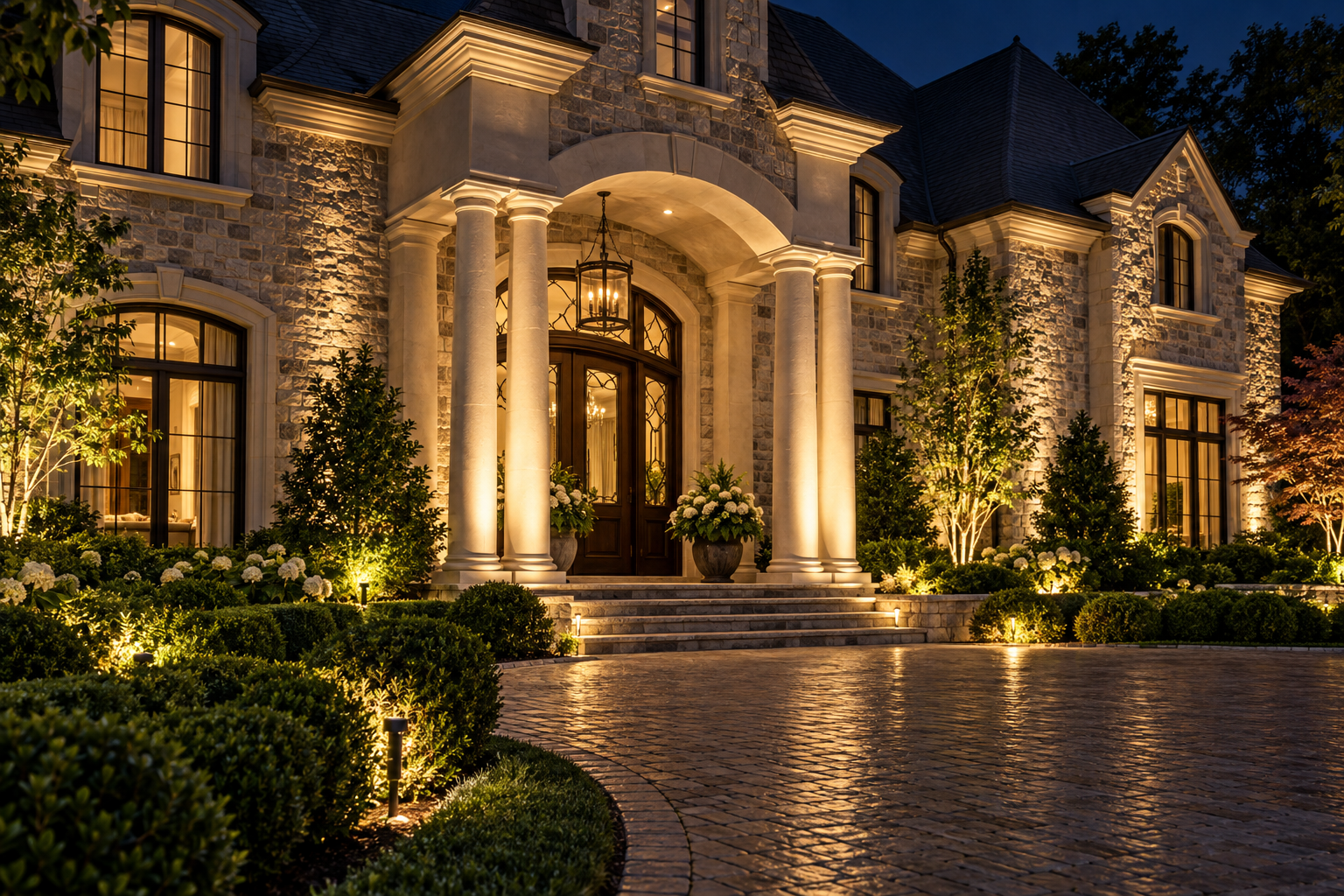
Ask whether the proposal identifies fixture types, output and color temperature. A professional plan should explain why a light belongs at each location. Fewer well-selected fixtures can make a more convincing design than a larger number pointed in roughly the right direction.
Let’s plan your landscape lighting.
Compare The Entire System Behind The Lights
For wired low-voltage lighting, the transformer, cable and connections are fundamental. The installer must account for electrical load, run lengths and voltage at the fixtures. Outdoor connections need the correct protection for their location; exposed or improvised joins can undermine an otherwise good system.
Solar fixtures have a different trade-off: they avoid a wired transformer but depend on the available sunlight, battery condition and product design. A shaded planting bed may not provide the charging conditions shown in the marketing photo. Evaluate the location as well as the light.
Ask How Repairs Will Work
Some fixtures allow lamp replacement; others use replaceable LED modules; others require replacing the whole fitting. Integrated LEDs are not automatically poor quality, and replaceable lamps are not automatically the best fit. What matters is knowing the service approach and likely availability of compatible parts.
Compare product warranty, installer workmanship coverage and service labor separately. Ask who diagnoses a fault and whether a failed light, driver, transformer or connection is handled differently. Your written proposal should identify the actual warranty for the selected equipment.
A Useful Quote-Comparison Checklist
- Exact fixture models, housing materials and finishes.
- Intended lighting effect and coverage at each area.
- Transformer capacity and cable layout appropriate to the design.
- Protected connections and accessible service points.
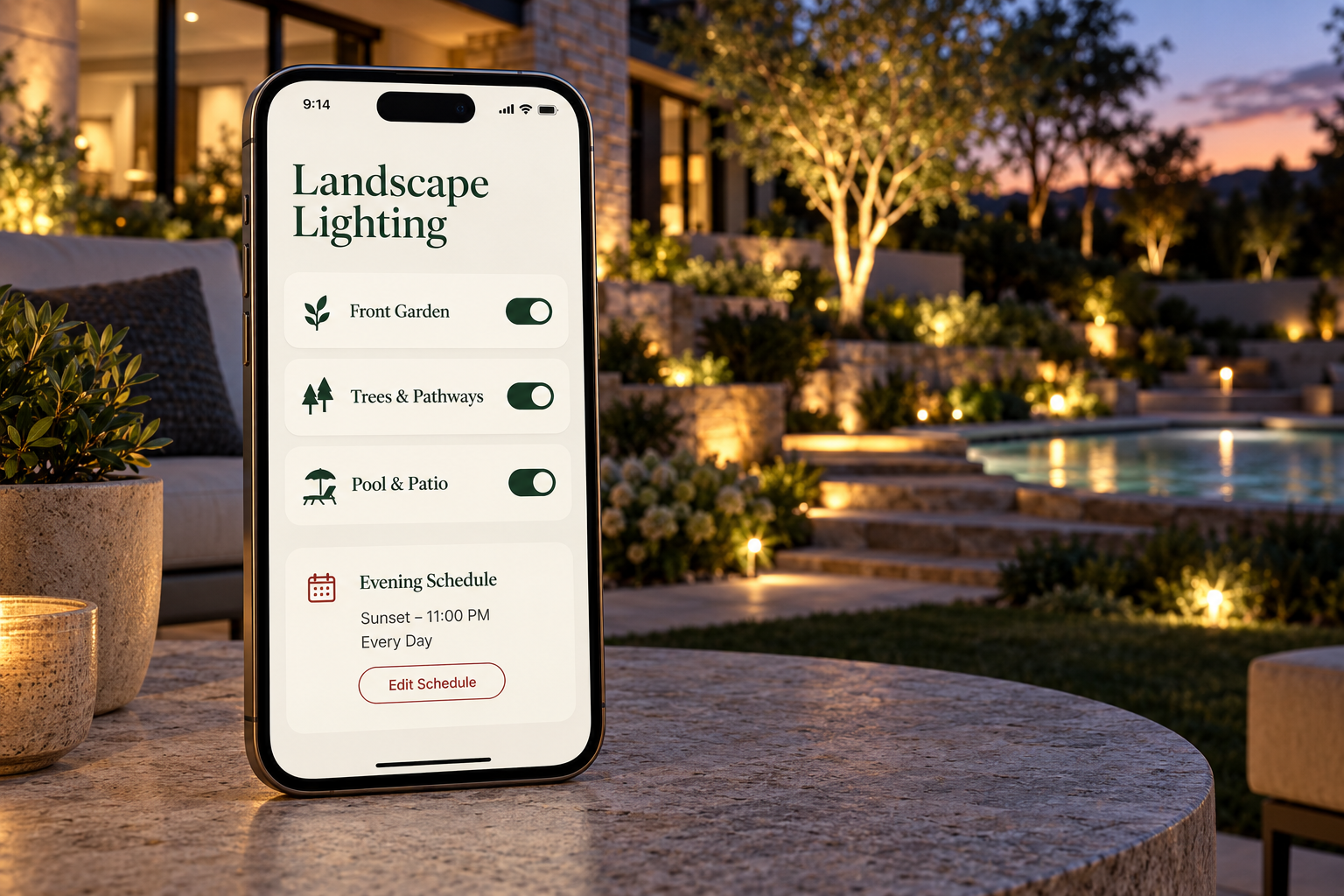
- Schedules and independently controlled zones, if included.
- Parts coverage, labor coverage and the contact for service.
- Whether future additions are supported and what they would require.
A professional quote includes design and installation work that a retail product price does not. Compare the same end result before judging totals. If the budget is limited, start with a focused area done well rather than buying more fixtures than the plan needs.
Common Questions
Are solar lights always a bad choice?
No. They can be convenient for suitable locations and expectations. A wired system offers a different approach to planned coverage and consistent scheduled operation; compare the actual products and site conditions.
Do I need the most expensive fixture everywhere?
No. Choose appropriate construction, optics and serviceability for each application. Thoughtful selection matters more than simply buying the highest price point.
Can I start with just the front garden?
Yes. A focused first phase can include a path, house accents and a key planting feature, with expansion considered in advance.
A Lighting Plan For Your North Jersey Home
The Real Houselights of NJ serves Bergen, Passaic, Essex and Morris counties, plus Rockland County, NY. Tell us what you want to light, the areas you use most, and your project budget. We’ll review your priorities and recommend a practical design for your property.
Start with your ideas. Build around your budget.