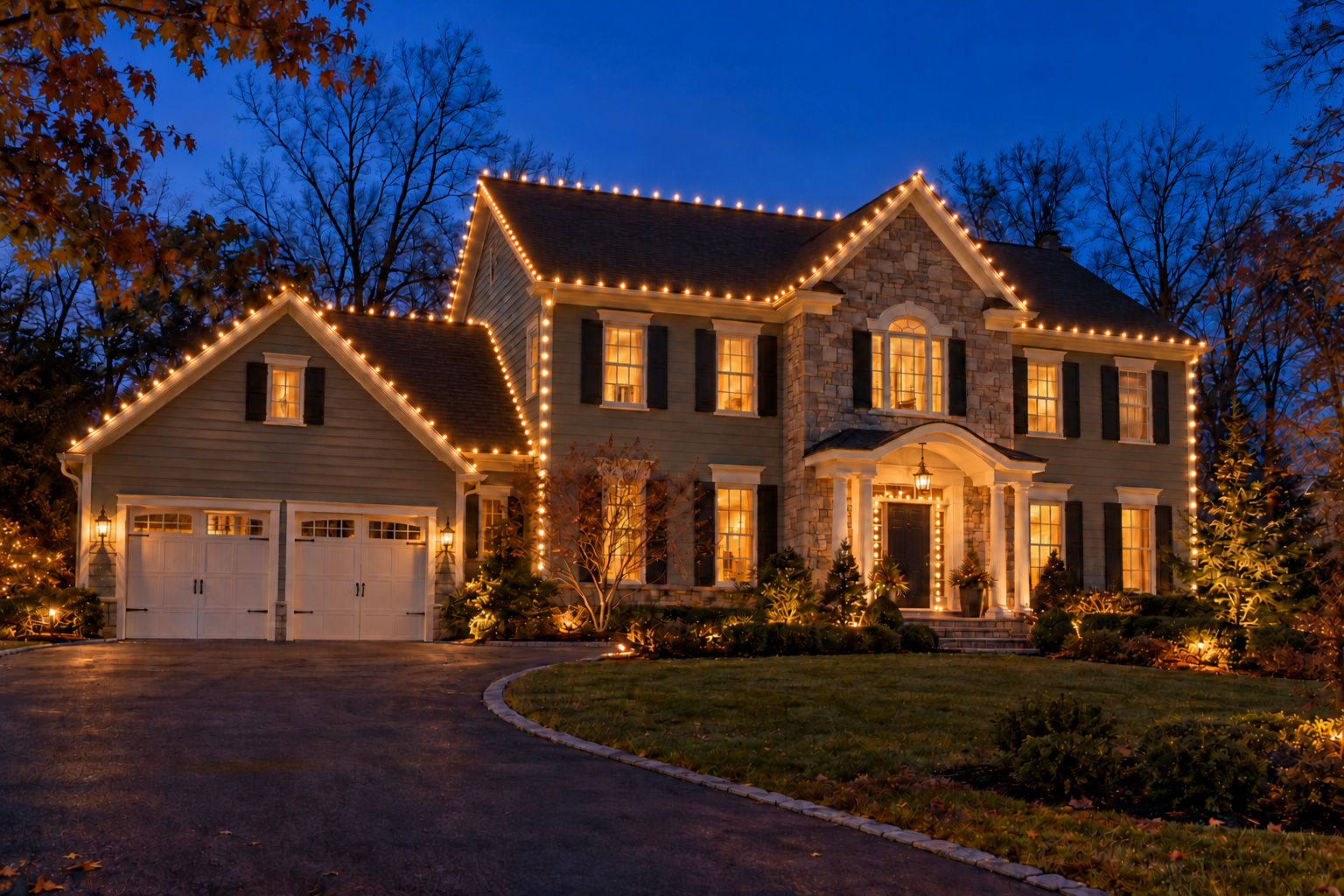
You can already picture the moment: turning onto your street after dark and seeing your home ready for the holidays. The roofline glows, the entrance feels welcoming, and the whole property has a little more warmth. Then you open your lighting proposal and face a different question: which package actually gets you there?
Bronze, Silver, and Gold offer different levels of coverage. Add-ons let you bring attention to the details you love. Choosing between them becomes much easier when you start with the view you want to create and work backward. Here is how we approach that decision.
First, Decide What You Want To Notice
Before comparing package prices, imagine arriving home. Do you want a crisp outline across the front of the house? Do you love the shape of your roof and want more of its architecture visible at night? Or do you picture a fuller display that continues around the sides and draws attention toward your front door?
Now consider the actual approach to your property. A home viewed straight on from the street presents differently from a corner property or a house reached by a driveway along one side. Your favorite feature may be a deep porch, a beautiful tree, or a prominent roof peak. Give that feature a role in the design.
You do not need to illuminate every available surface. Leaving some areas dark gives the illuminated features space to stand out and makes the display easier to take in.
Know Exactly Which Part Of The House You Are Lighting
Roof terms can sound similar, but they describe different lines. Use the arrows below to identify each feature before comparing packages.
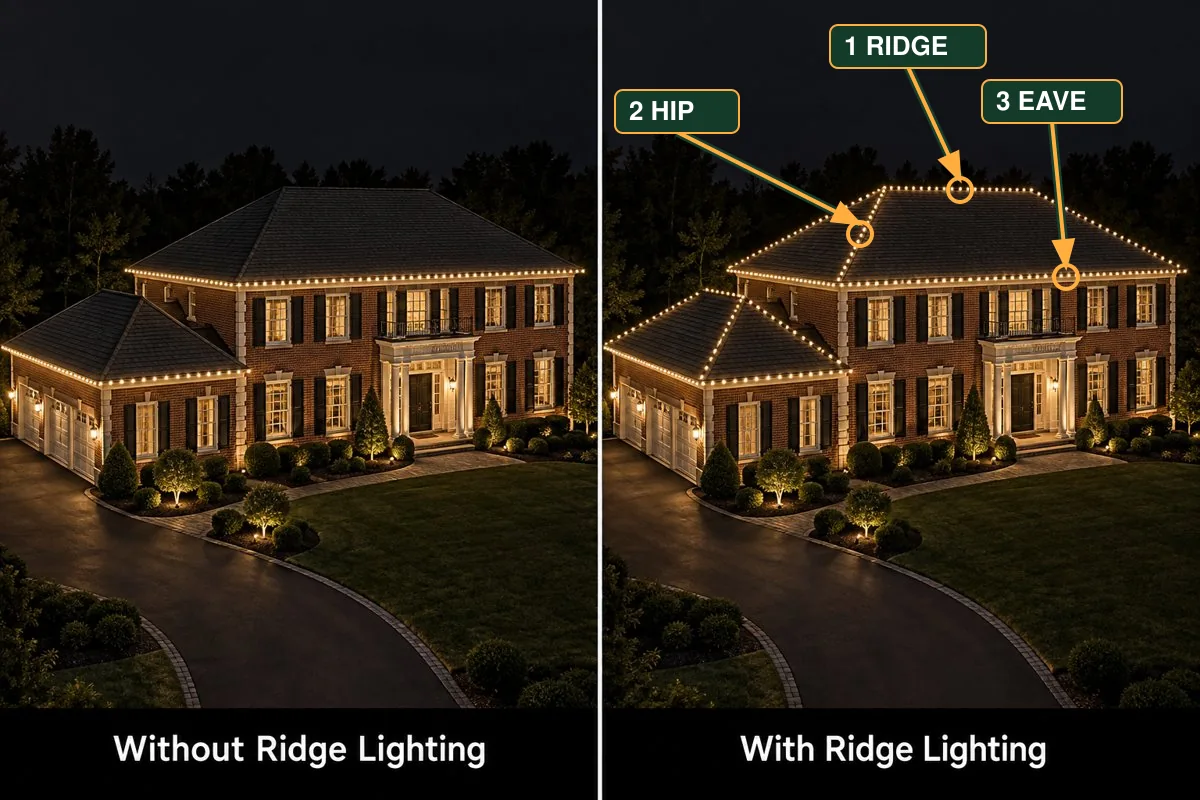
- Ridge: The high, usually horizontal line where two sloping roof surfaces meet. Think of it as the spine along the top of the roof. In the right-hand image, arrow 1 points to that top horizontal run.
- Hip: A sloping outside intersection where two roof surfaces meet. It runs diagonally down from a ridge or high point toward an outside roof corner. Arrow 2 points to a hip—not a gutter.
- Eave: The lower edge of a roof slope, often where a gutter is attached. Arrow 3 points to that lower perimeter. Lighting this edge does not automatically mean the ridge above it is lit.
A Front Gable Edge Is Different From A Ridge. On a triangular front gable, the two outside sloping edges form an upside-down V. These edges are also called rakes. They can be part of the front roofline even though they slope upward to a peak. The ridge runs back from the peak along the top of the roof.
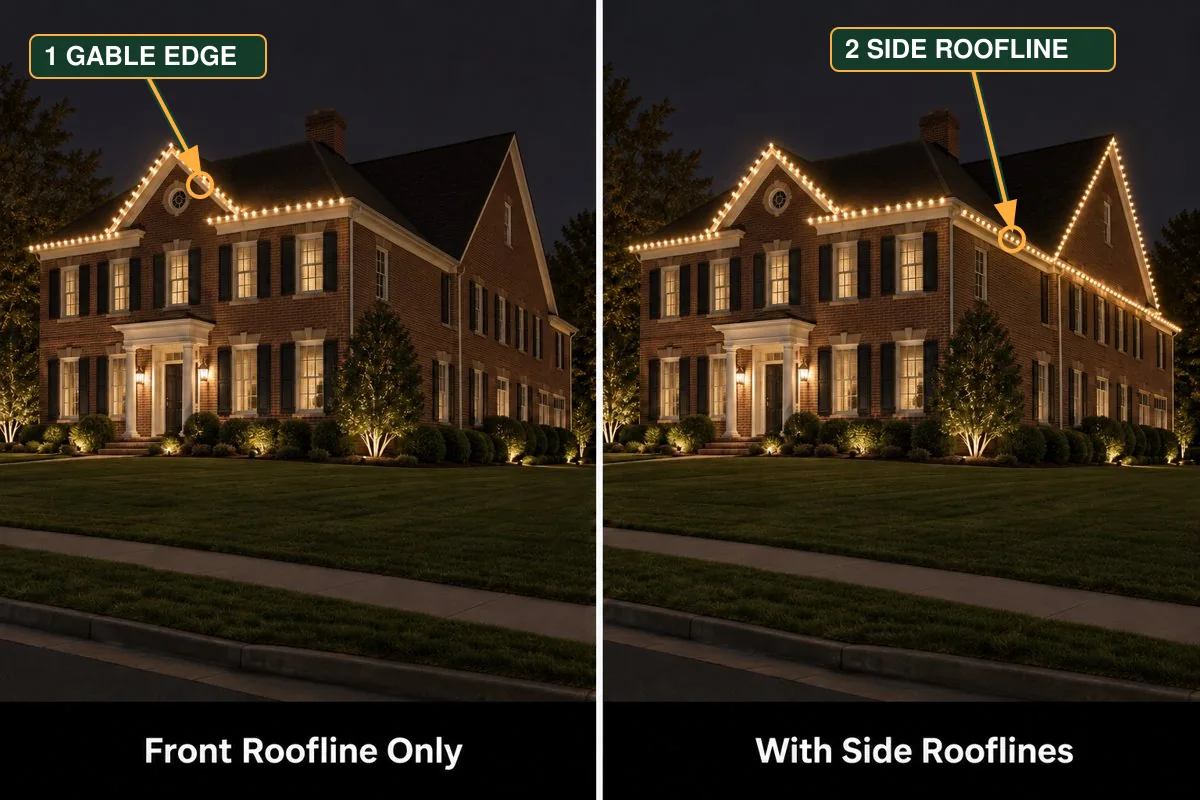
Side Roofline: The outside roof perimeter continuing along the left or right side of the house. A front-only view may hide much of that coverage. Lighting the sides and lighting the upper ridge are separate choices.
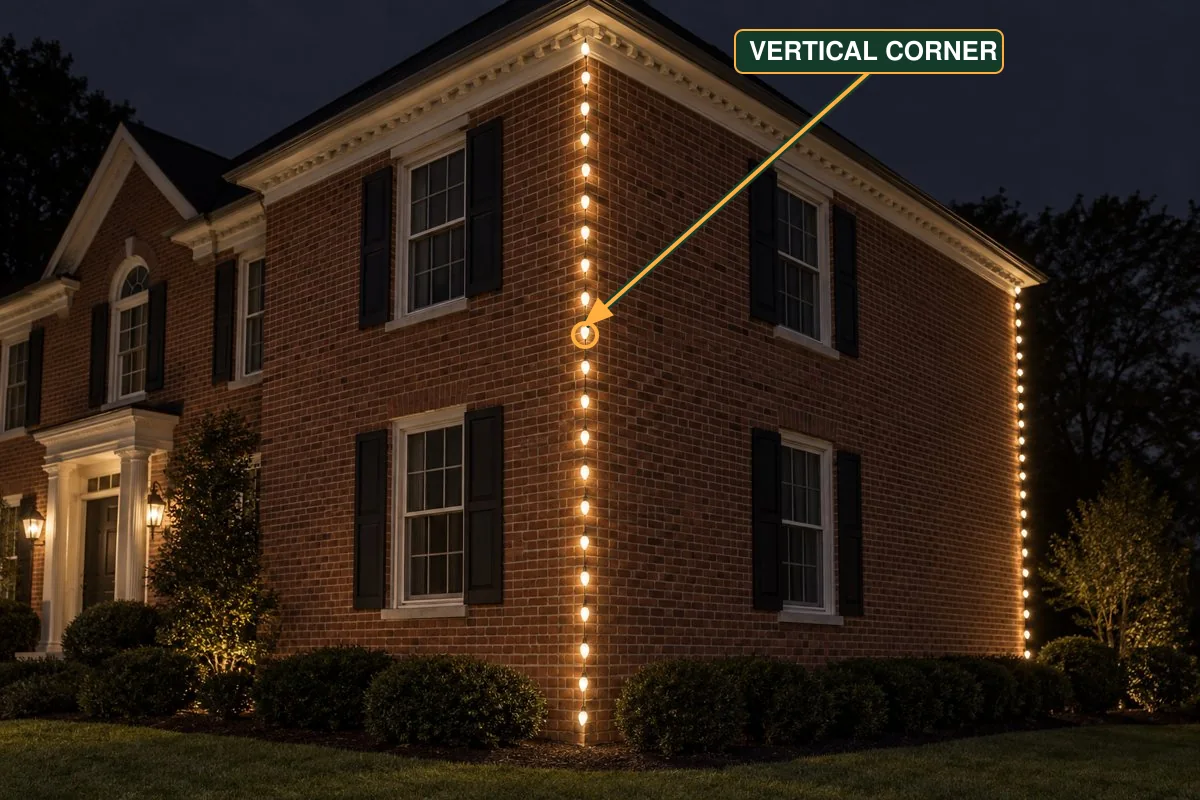
Vertical Corner: The upright edge of the walls, rather than a roof edge. Gold includes two main front-facing vertical corner edges; extra corners are separate selections where offered.
For a cleaner design, we leave the horizontal gutter directly beneath a gable’s two sloping edges unlit when it would close the shape into a triangle. The illuminated slopes stay as an open-bottom V. Ordinary roofline runs elsewhere can still be included.
| Feature | Bronze | Silver | Gold |
|---|---|---|---|
| Front Roofline & Front Gable Edges | ✓ | ✓ | ✓ |
| Roof Ridges & Roof Hips | — | ✓ | ✓ |
| Both Side Rooflines | — | — | ✓ |
| Two Vertical Corner Edges | — | — | ✓ |
| One Front Door Light Outline | — | — | ✓ |
✓ Included · — Not In Base
The comparison describes the standard packages. Your written proposal identifies the actual coverage for your property. Add-on example images demonstrate specific features and may show other lighting that is not included.
Bronze: A Clean, Front-Roofline Display
Bronze focuses on the front roofline, including the appropriate front-facing eaves, gable edges, and dormer roof edges. It gives the house a clear holiday outline while keeping the overall design simple.
This is a strong choice when the front of your home is the main view from the street, when you prefer a restrained display, or when you would rather put part of your budget toward one meaningful landscape or entrance feature. A simple roofline can feel complete on its own.
Look closely at the Bronze rendering in your proposal. Follow the illuminated front edges with your eye. If those lines already capture the character of your house, you may have found your starting point.
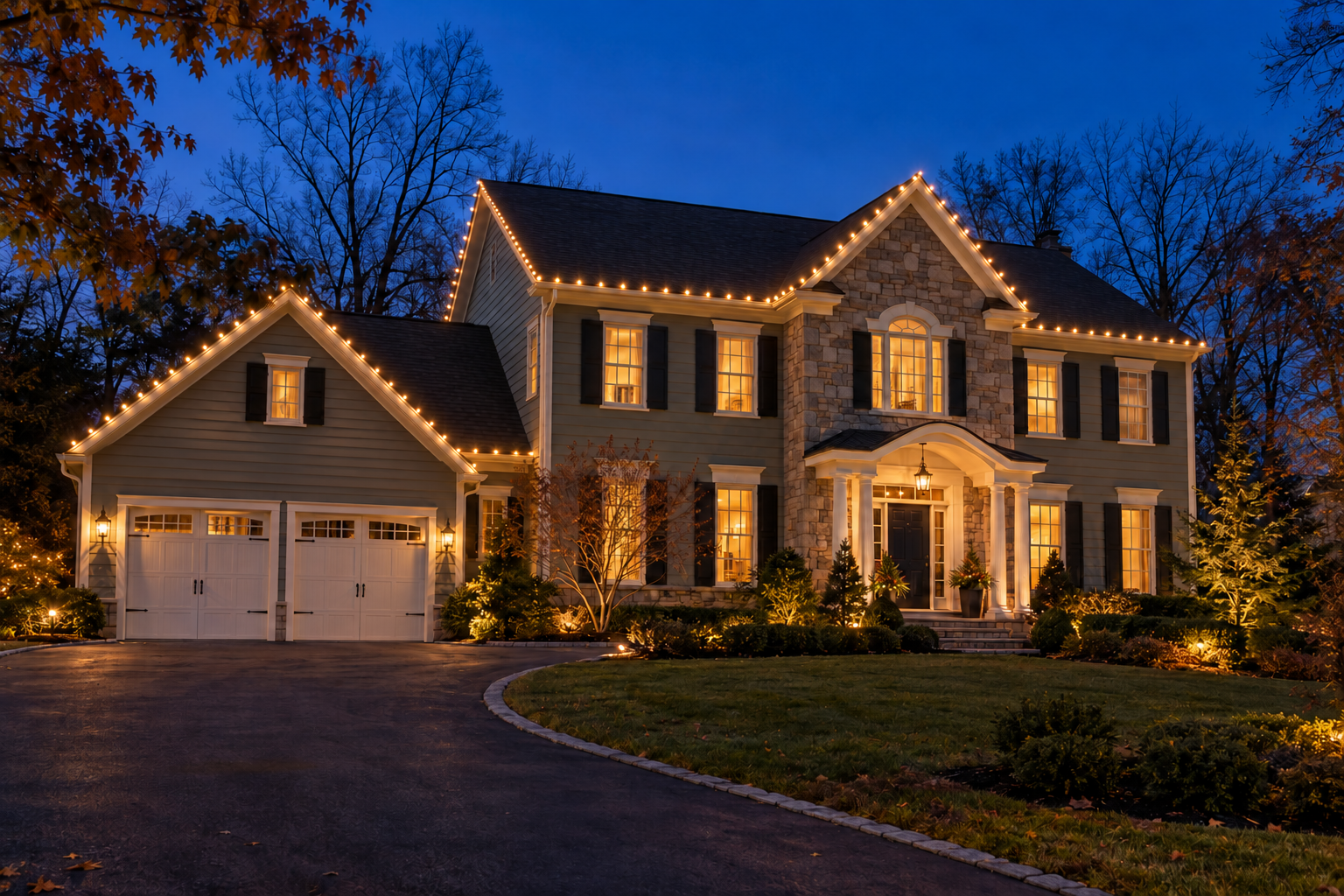
Silver: More Definition Across The Roof
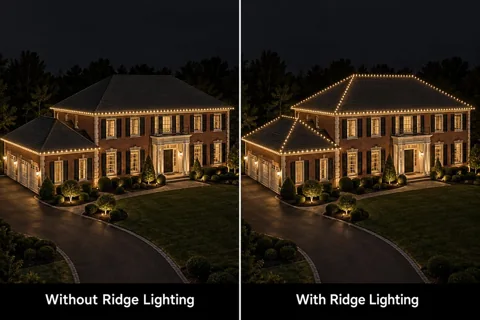
Silver includes the Bronze coverage and adds Roof Ridges & Roof Hips. These are upper roof features that help describe the shape of the roof beyond its front perimeter.
The visual difference depends on your home. When upper roof features are visible from the approach, illuminating them can give the display more depth and architectural detail. Compare the same roof areas in the Bronze and Silver renderings to see where the additional coverage appears.
Silver is worth considering when the roof is one of your home’s most distinctive features. If your eye naturally goes to the peaks and roof shape, you may enjoy that added definition more than several smaller decorations at ground level.
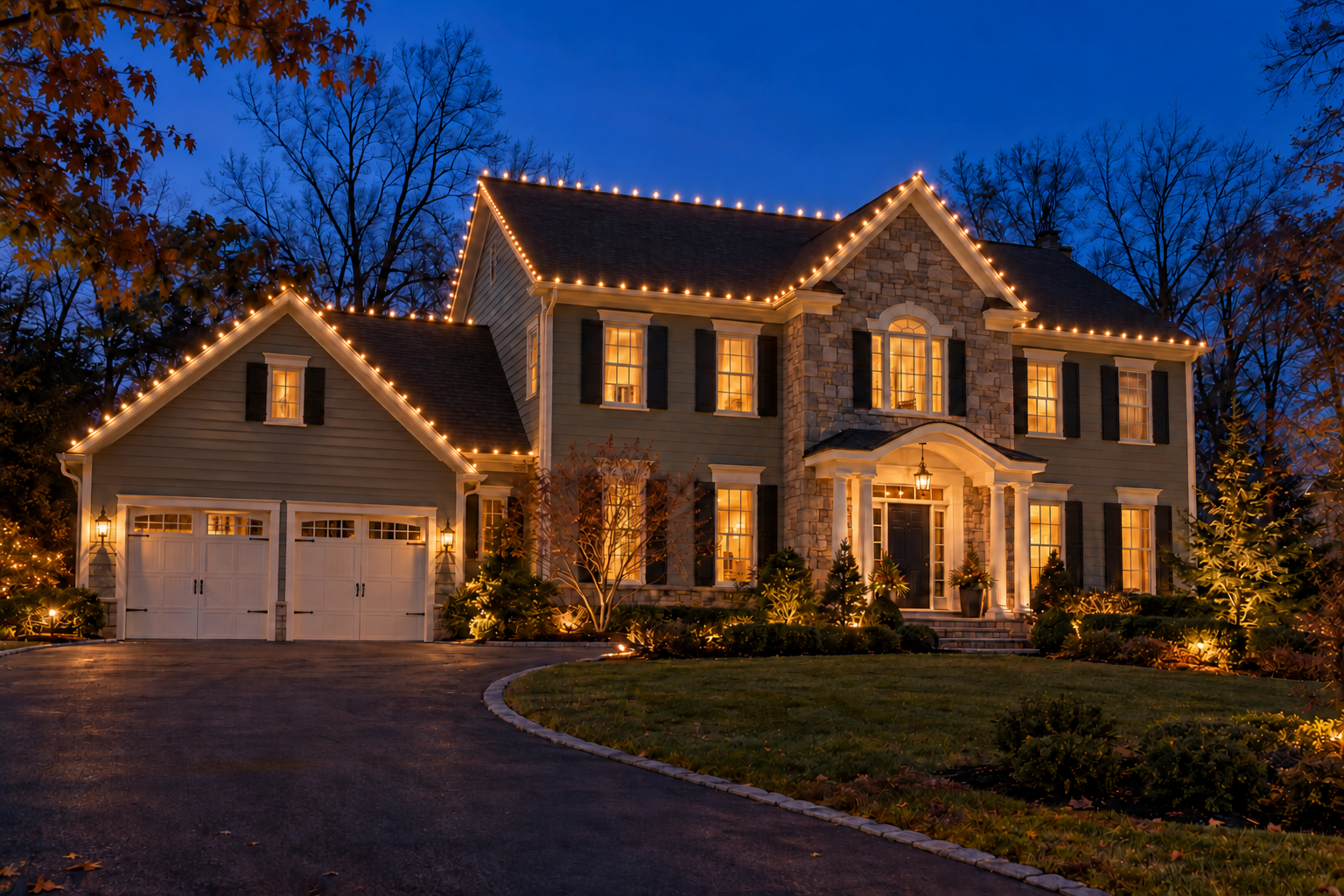
Gold: A Fuller Design Around The Home
Gold builds on Silver with left and right side rooflines, two vertical corner edges, and one front door outline with matching lights. It brings more of the house into the display and connects the roof treatment with selected features below.
This can be particularly appealing when you see the home from an angle, when one or both sides are prominent, or when you want the lighting to carry around the building as you approach. The corner edges add vertical definition, while the door outline helps bring attention to the entrance.
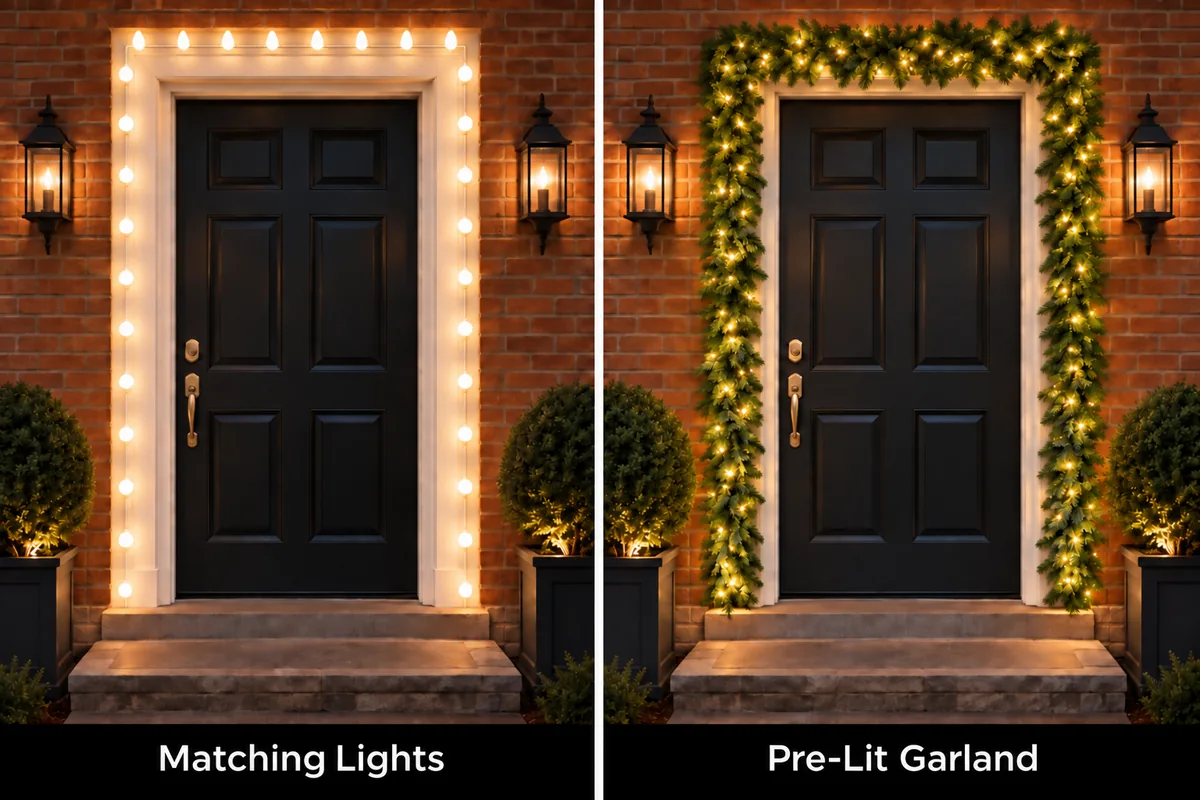
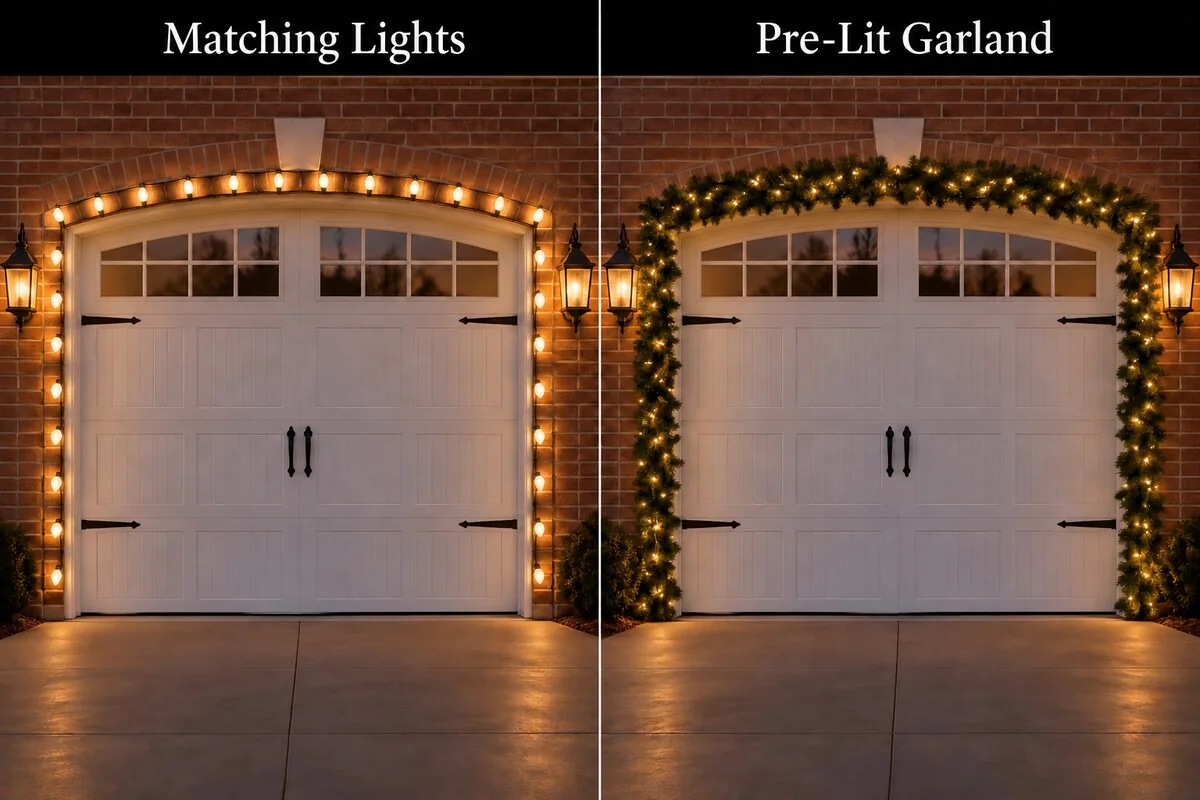
Check the included features in your own proposal before adding extras. Gold already includes one front door light outline and two corner edges. Additional door outlines or corner edges should be chosen only for additional locations. Garland is a separate design choice; it is not automatically the same item as an included light outline.
Choose Add-Ons By Their Role In The Design
The detail images below come from the Instant Quote tool’s example gallery. They illustrate individual options; they are not a promise that every pictured feature is included in a base package. Any prices printed in examples are illustrative—use your current proposal for your actual total.
Once you have chosen the house coverage you like, ask what would make the scene feel more complete. Each addition should have a clear job: create a focal point, welcome visitors, connect parts of the property, or bring a favorite landscape feature into view.
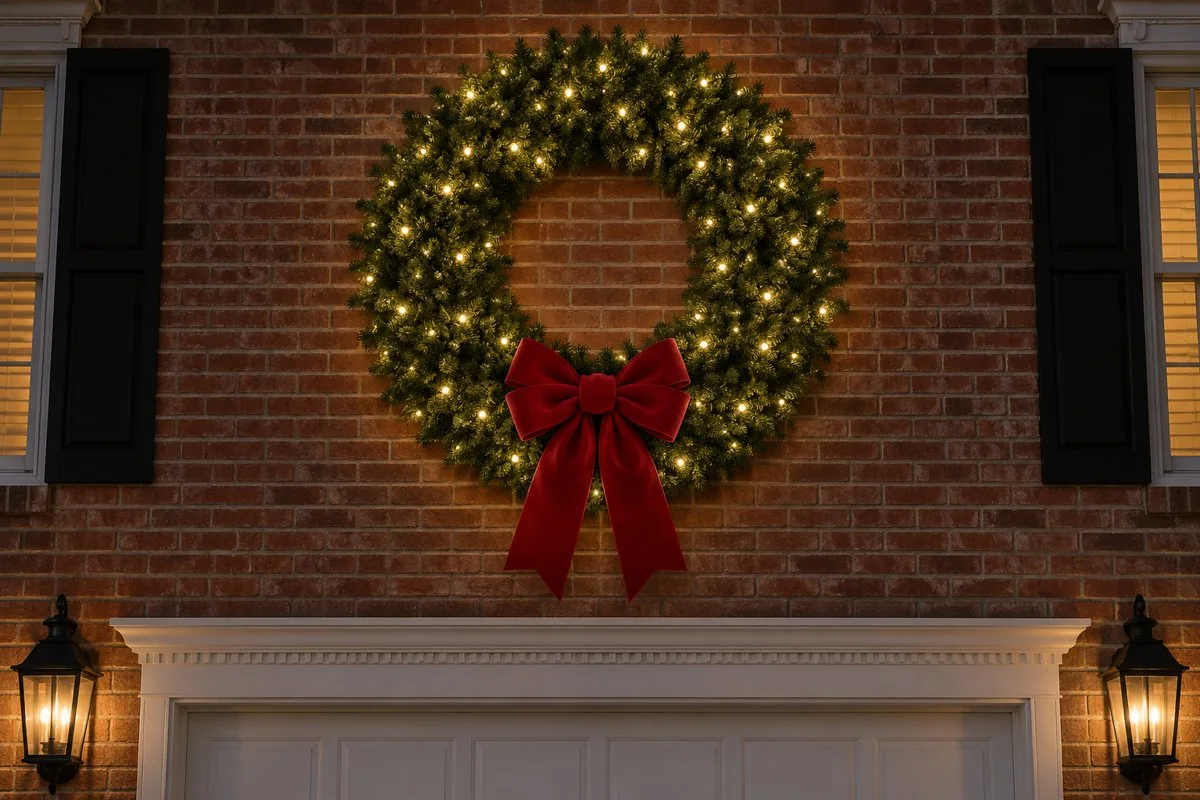
Wreaths: Give The Eye Somewhere To Land
A wreath can create a clear focal point over an entrance or on a prominent section of the house. Think about proportion and viewing distance. A wreath that looks substantial standing beside it may feel small from the street. The right placement matters just as much as the size.
Garland And Columns: Make The Entrance Feel Welcoming
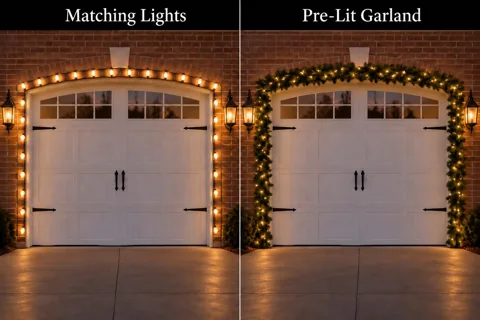
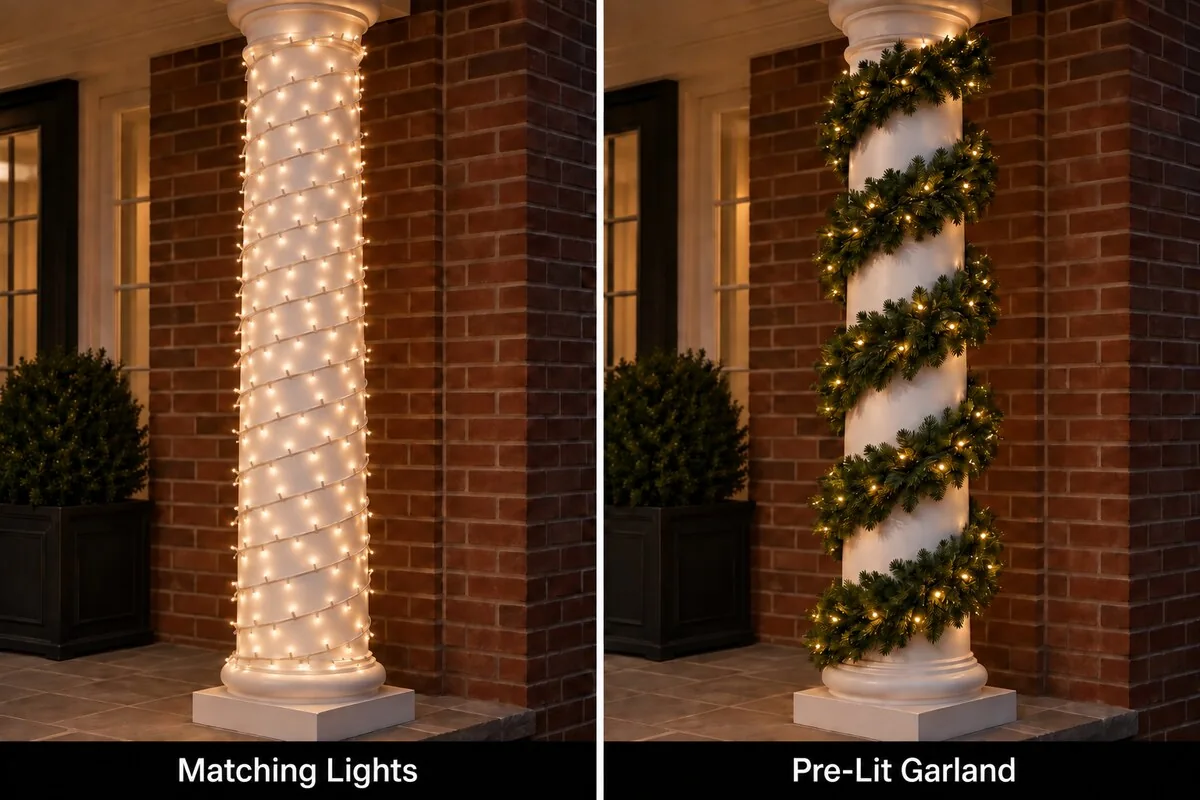
If your porch or doorway is a feature you love, garland can make that area feel especially festive. Consider whether you want the simpler appearance of a light outline or the greenery and texture of lit garland. For columns, choose a treatment that works with the entrance as a whole rather than selecting each element independently.
Trees And Shrubs: Bring The Garden Into The Picture
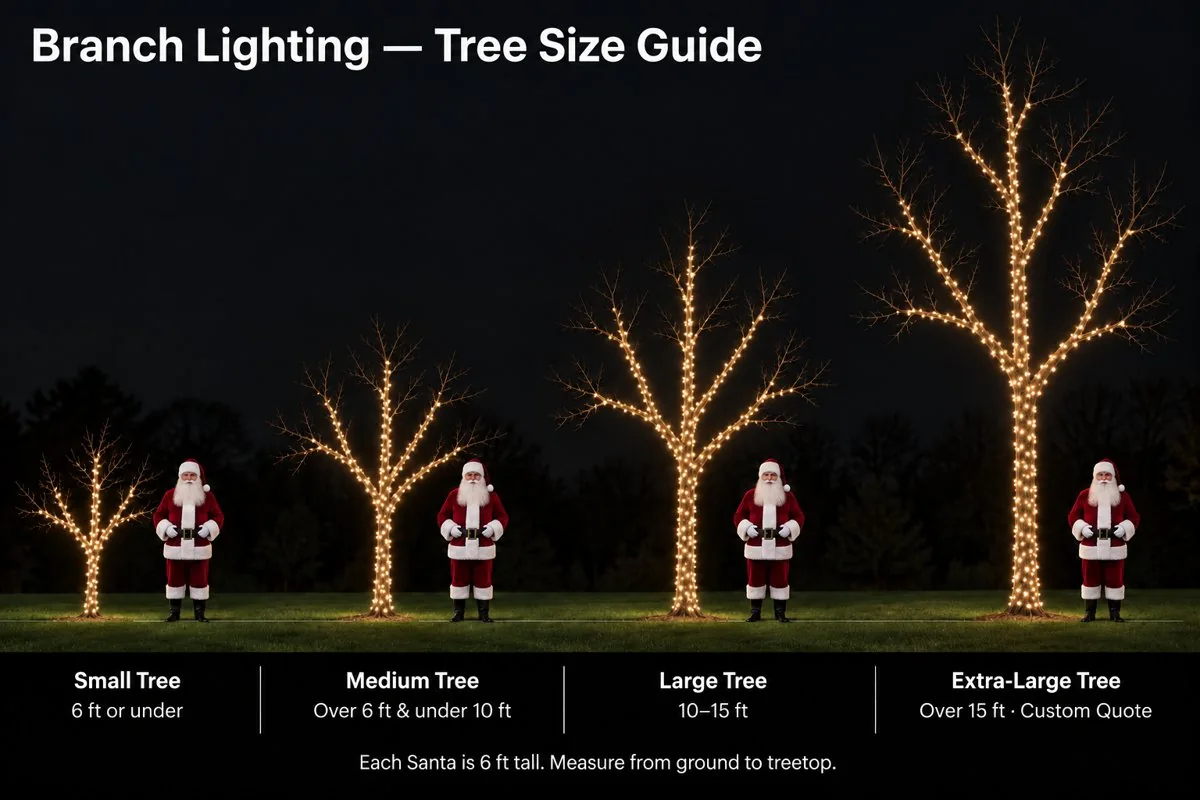
A featured tree can draw the display beyond the house and create another point of interest. A group of shrubs can connect the facade to the landscaping below. Start with the plants that are most visible from the street or driveway, and consider how they relate to the illuminated house behind them.
You do not have to light every tree. One well-positioned feature may deliver the feeling you want. Tree size, shape, and the intended coverage affect the scope, so use the specific options in your proposal when comparing choices.

Walkways And Driveways: Connect The Approach
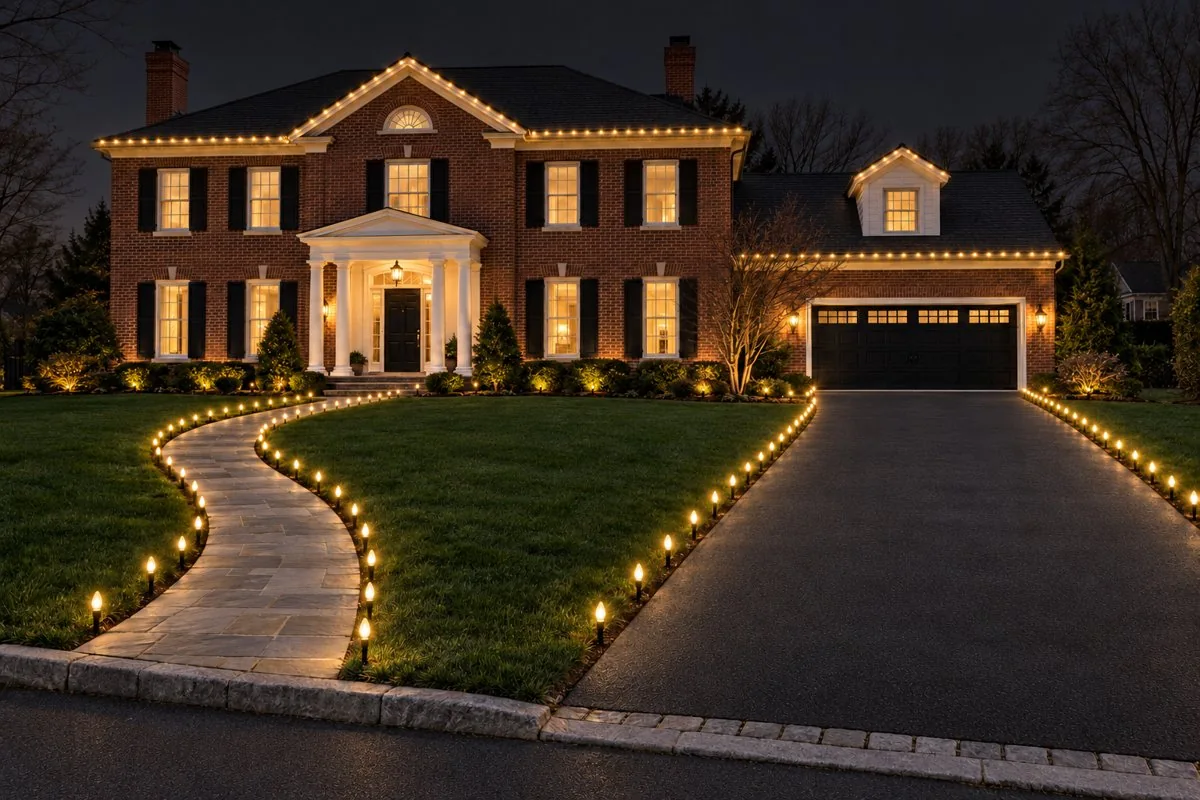
Ground-level lighting can give the eye a route through the display. Walkway lighting helps connect the yard with the front entrance, while driveway lighting can emphasize the approach to the property. Consider which route people actually see and use before choosing either—or both.
Windows And Garage Doors: Add Selective Detail
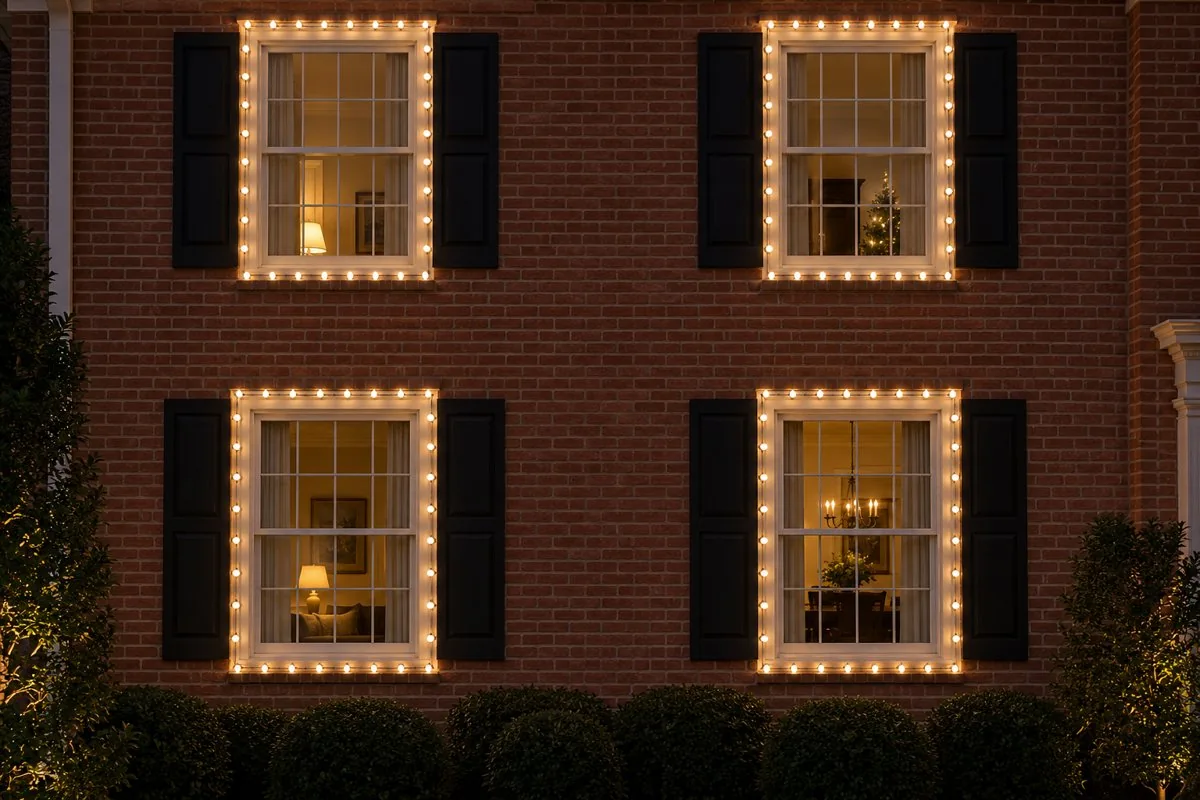
Outlines can highlight symmetry or a prominent architectural feature. Start with the features that support the overall composition. If the roof and entrance already create a strong design, additional outlines may be optional finishing touches rather than the next priority.
Three Ways To Put It Together
Simple And Elegant: Start with Bronze and let the front roofline carry the display. Add a single wreath if the house has a natural location for one. This combination keeps the design easy to read and gives the eye a clear focal point.
Warm And Welcoming: Choose the roof coverage you prefer, then concentrate your extras around the entrance. Garland or a wreath and a defined walkway can create a welcoming arrival without requiring decorations throughout the yard.
A Fuller Festive Display: Consider Gold when the sides and entrance play an important role in the view. Add a featured tree or a coordinated group of shrubs to connect the house with the landscape. Keep enough space between features for each to remain distinct.
These are design examples, not fixed bundles. Your proposal shows the options and pricing available for your home.
See the possibilities for your home.
Build Your Custom Lighting DesignMake Your Budget Follow Your Priorities
Choose the feature you would be most disappointed to leave out. Then build the rest of the design around it. For one homeowner, that is the full roof treatment. For another, it is a beautifully decorated entrance or the tree everyone sees from the street.
Compare two complete combinations before deciding: a smaller package with a favorite add-on, and a larger package with fewer extras. Review the current total for each. Neither approach is automatically better; the useful comparison is which one creates more of the look you want within your budget.
Use Your Renderings As A Comparison Tool
Compare the packages on the same home photo, concentrating on one area at a time: front roofline, upper roof, sides, corners, and entrance. Keep the color choice consistent while you compare coverage, so you can see what the package change contributes.
The images in this guide are design renderings, not photographs of completed installations. Your own renderings help you visualize the intended appearance; your proposal’s written inclusions and selected quantities define what you are choosing. A front-facing image also cannot show every feature on a side of the house.
If something in a rendering is unclear, ask before booking. That is especially helpful when a tree obscures a roof edge or a side of the house is outside the photo.
Common Questions
Can I Choose Bronze And Still Add A Tree Or Garland?
Yes. The base package establishes the house coverage, and available add-ons let you customize the rest. You can create a thoughtful display with a simple roofline and one or two carefully chosen extras.
Does Gold Include Every Decoration?
No. Gold expands the house coverage described above. Features such as wreaths, tree lighting, walkway lighting, and additional outlines are separate unless your particular proposal explicitly includes them.
Do I Need To Choose Everything?
No. Start with the parts of the property you want to highlight. A cohesive display can be modest or extensive; what matters is how the chosen features work together.
Find The Look You Want To Come Home To
The right package is the one that suits your home, your priorities, and your budget. Start with the house coverage that feels right, add details with a purpose, and use the renderings to compare the result. We can help you work through the choices so your holiday display feels considered from the roofline to the front door.